The quest for a genuine Rudraksha should be guided by clarity, not apprehension. While the market may seem complex, the signs of a truly high-quality, authentic bead are written in nature itself. By focusing on the structural integrity of the seed and sourcing from trusted traditional centers, you ensure that the Rudraksha you bring into your life is a pure instrument of spiritual focus.
Visual Markers of Authenticity
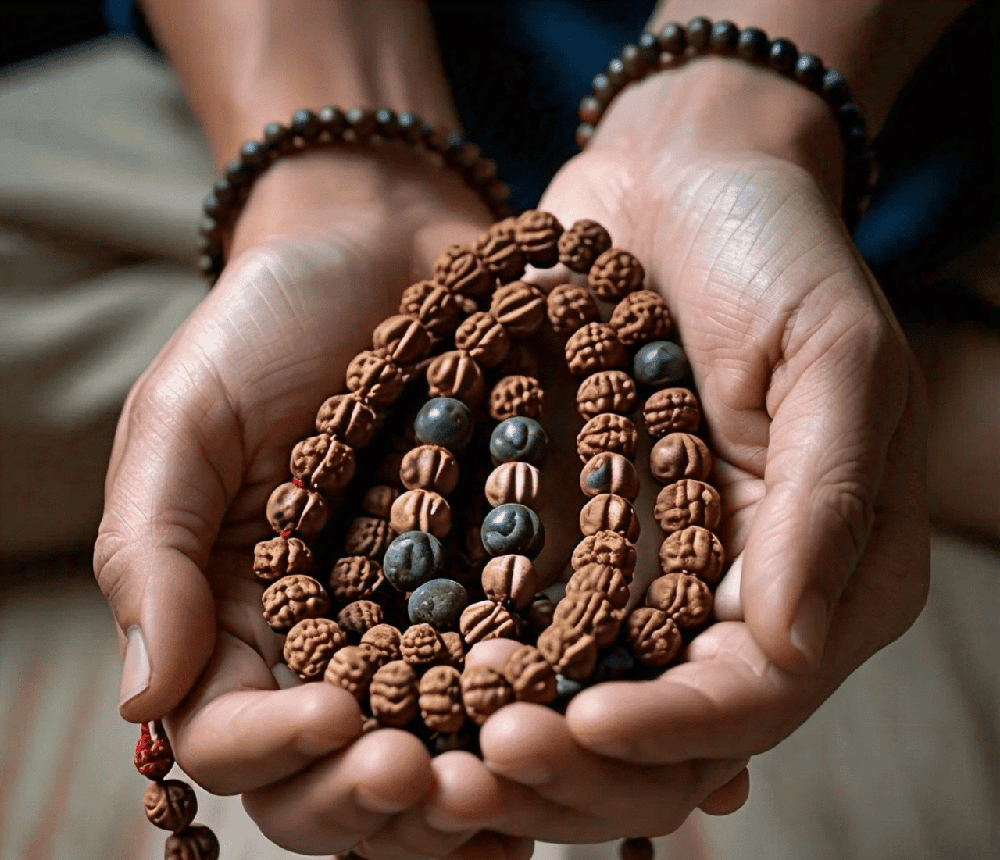
When evaluating a Rudraksha bead, your focus should be on the botanical "signature" of the seed. Here are the core indicators of a quality bead:
- Well-Defined Mukhi Lines: Genuine beads exhibit distinct, continuous grooves (Mukhis) that run from the crown to the base without interruption. These should appear organic, not laser-etched or manually carved.
- Natural Texture: The surface should feel organic. Avoid beads that look artificially polished, lacquered, or covered in thick, suspicious wax.
- Structural Integrity: Inspect the bead carefully, particularly around the central threading hole. Avoid beads with deep cracks, wide fissures, or man-made perforations that compromise the shell.
- Organic Weight and Shape: Rudraksha is a seed. While most are spherical, slight natural irregularities in shape are common and are actually signs of organic authenticity.

Figure 1: Authentic Rudraksha beads display a unique, complex natural pattern.
Selection Principles for Seekers
Selection should be an intentional process based on your individual needs rather than popularity.
- Purpose-Driven Selection: Define your goal—whether it is deeper meditation, confidence, or emotional balance—and select the Mukhi that traditionally supports that intention.
- Beginner-Friendly Beads: If you are starting your practice, the 5-Mukhi Rudraksha is widely recommended for its universal and gentle stabilizing energy.
- Sourcing Trust: Always acquire your beads from established Rudraksha centers that prioritize transparency and offer verified, high-quality specimens.
Essential Learning Resources
Frequently Asked Selection FAQs
What is the single most important test for authenticity?
The presence of natural, continuous Mukhi lines that are deeply embedded into the seed’s organic grain is the most reliable visual marker.
Does the size of the bead matter for potency?
No, size does not dictate effectiveness. Choose a bead size that you find comfortable for wearing or meditative japa.
Should I discard a bead if it develops a small chip?
Minor natural wear is normal over time; however, if a bead has significant structural cracks, especially near the center hole, it is generally recommended to discontinue using it.
Begin your journey with confidence. Explore authentic Rudraksha collections at OmmRudraksha.
Spiritual & Cultural Editorial Notice: This article is published exclusively as an educational and cultural exploration of Rudraksha bead selection. The information provided is based on traditional industry standards for identifying authentic, organic Rudraksha beads. This is intended for educational purposes only and does not constitute clinical, astrological, or medical advice. Rudraksha beads are natural organic products and must never be utilized to substitute for professional medical care or clinical health planning.