Rudraksha appears among the materials used for prayer beads in some Himalayan and Tibetan Buddhist contexts. It is not a requirement for all Buddhists or a universal symbol with one fixed meaning. The material and counting format should be understood within the particular practice a person follows.
A documented context for Rudraksha
Himalayan Art Resources' mala introduction discusses materials, components, counts and ritual uses. In its explanation of the Four Activities and the Samputa Tantra, Rudraksha is listed among materials connected with wrathful activities. This is a specific ritual context, not an instruction for a beginner to undertake such a practice.
The same reference describes a range of other mala materials and counting formats. It does not support the claim that Rudraksha is essential for Buddhist meditation or that every Buddhist mala should have a particular mukhi count.
What a mala is used for
A common practical role is keeping track of repetitions of prayers or mantras. A marker or head bead distinguishes a point in the strand; how it is handled and whether it is counted depends on the instructions followed. Counts such as 27 or 108 are familiar today, but there are other formats.
A mala used for a specific practice should meet that practice's requirements. Do not select it solely from an online benefit chart. Ask your own teacher or community about material, count and any restrictions before commissioning an expensive or specialised strand.
Avoid mixing unrelated associations
The earlier article assigned Five, Six and Seven Mukhi beads general Buddhist benefits, including chakra effects and Mahalakshmi associations. Those claims were not supported as universal Buddhist instructions. A Hindu devotional association can be meaningful in its own context without being automatically transferred to another religion.
Likewise, a seller cannot establish compassion, enlightenment or protection as properties of a bead through a laboratory certificate. Personal religious experience should not be turned into a guaranteed product outcome.
Choosing a suitable strand
- Confirm the material and counting format required by your practice.
- Check main beads separately from the head bead, dividers and counters.
- Compare bead diameter, weight, finished length and how the strand feels in the hand.
- Inspect the cord and fittings, and ask whether the pictures represent the offered assembly.
- Clarify documentation and any custom-stringing or return conditions.
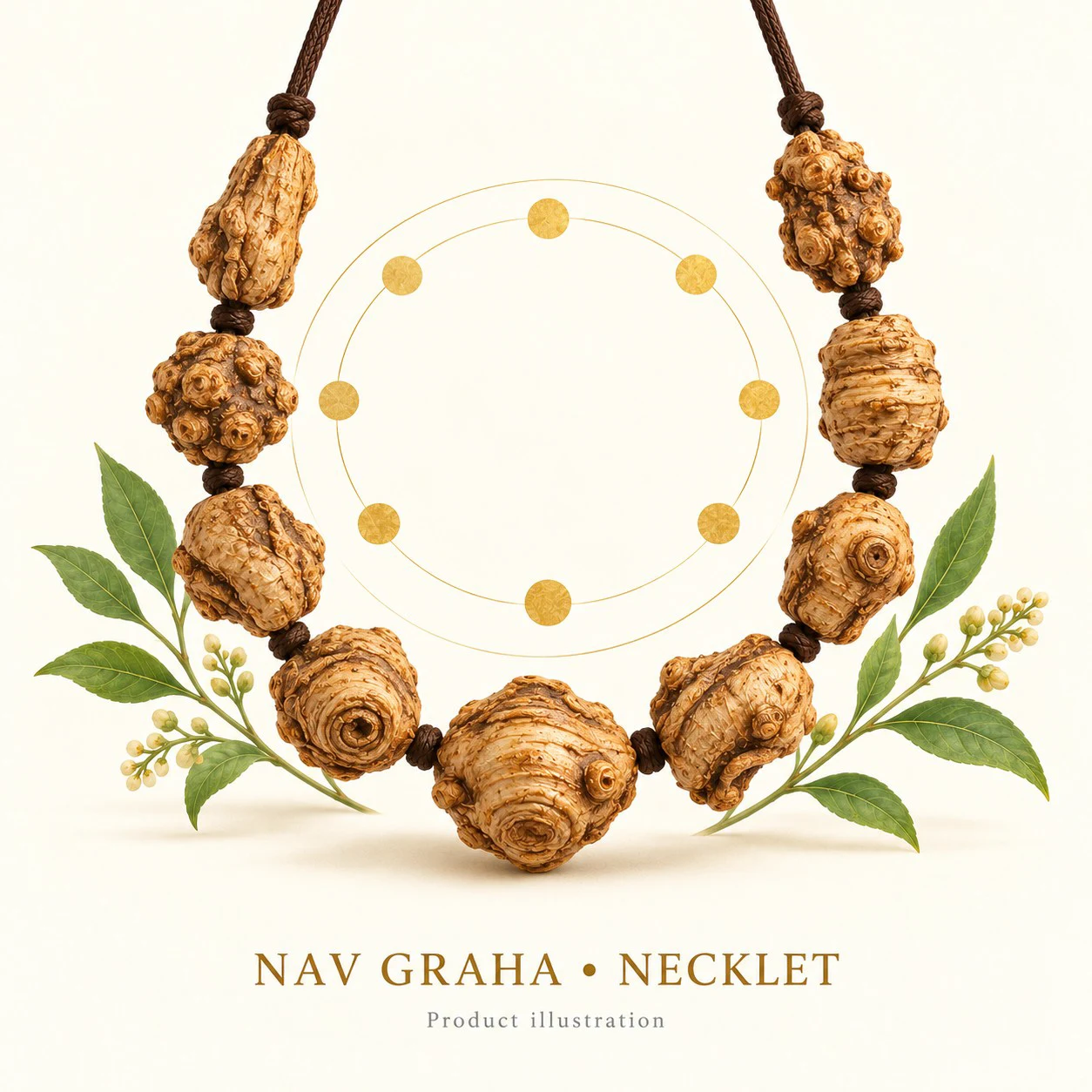
A 33-bead wearing Kantha is different from a 108-bead prayer-counting strand. A product collection name does not settle its counting format. There is no universal rule here that a rarer or more expensive Rudraksha produces better meditation.
Respect the practice, and care for the object
Handle the strand according to the guidance you follow and avoid unnecessary pulling, soaking or chemical cleaning. Every Omm product includes a DGTL Gem Lab certificate; read its actual scope. Basic energization is included for orders, but a seller's preparation is not an initiation into a Buddhist practice. Ask separately about any requested religious service.
Our team can discuss the actual offered item, dimensions, construction and documentation. Practice-specific religious guidance remains with the appropriate teacher or community.
Reviewed and revised by Omm Rudraksha & Gemstones, 10 October 2026. The original publication date and page address are retained.