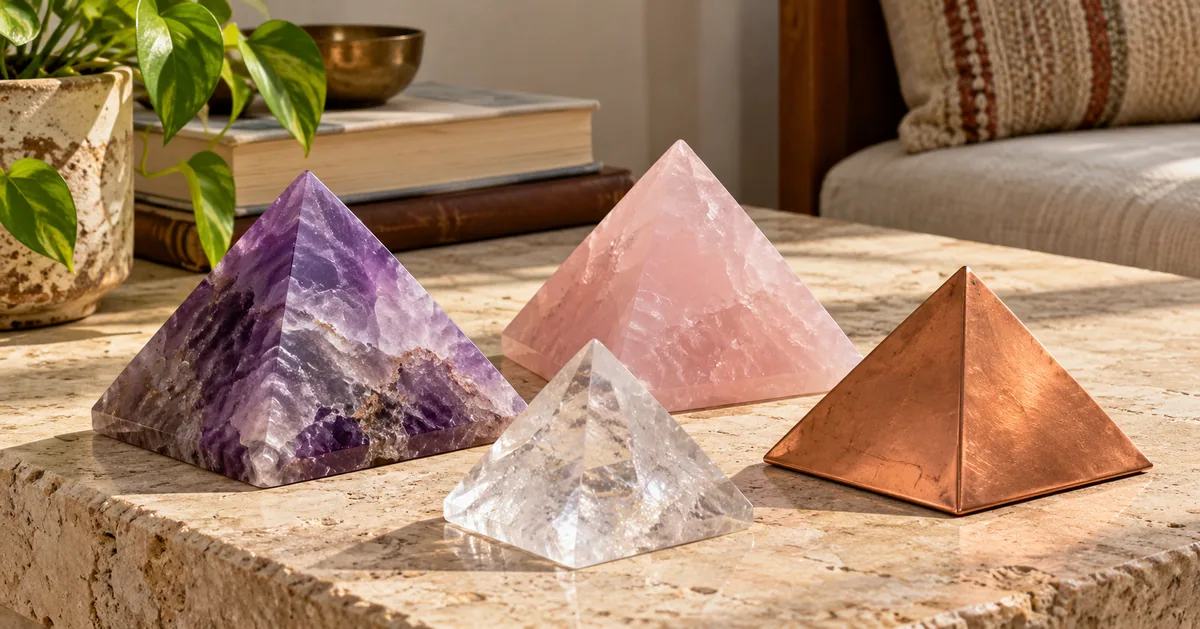
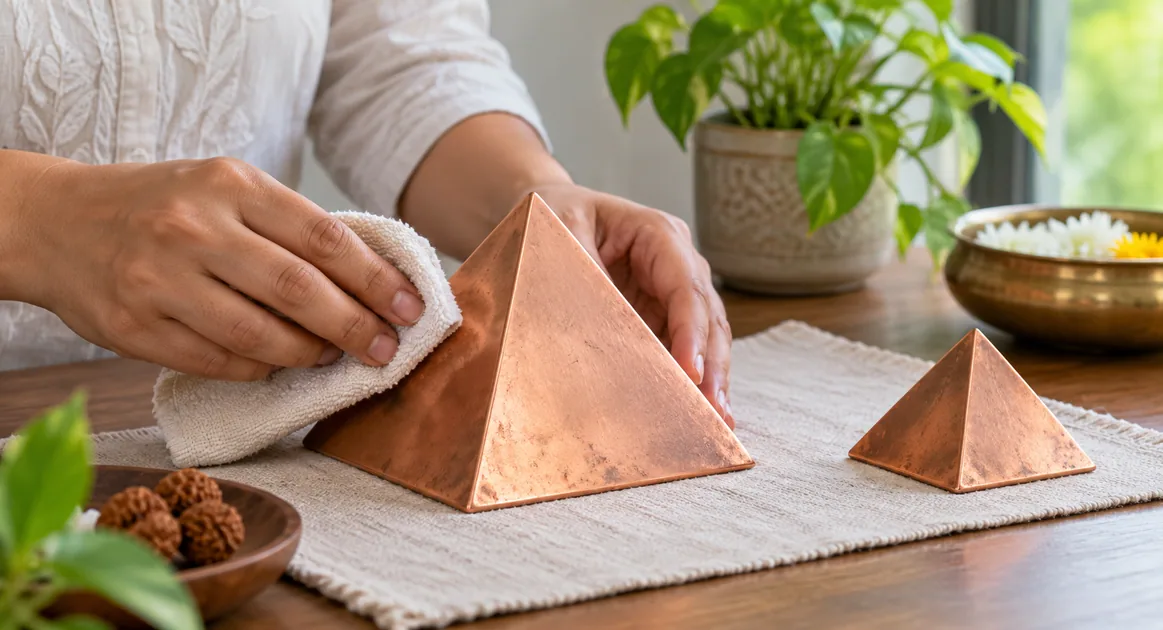
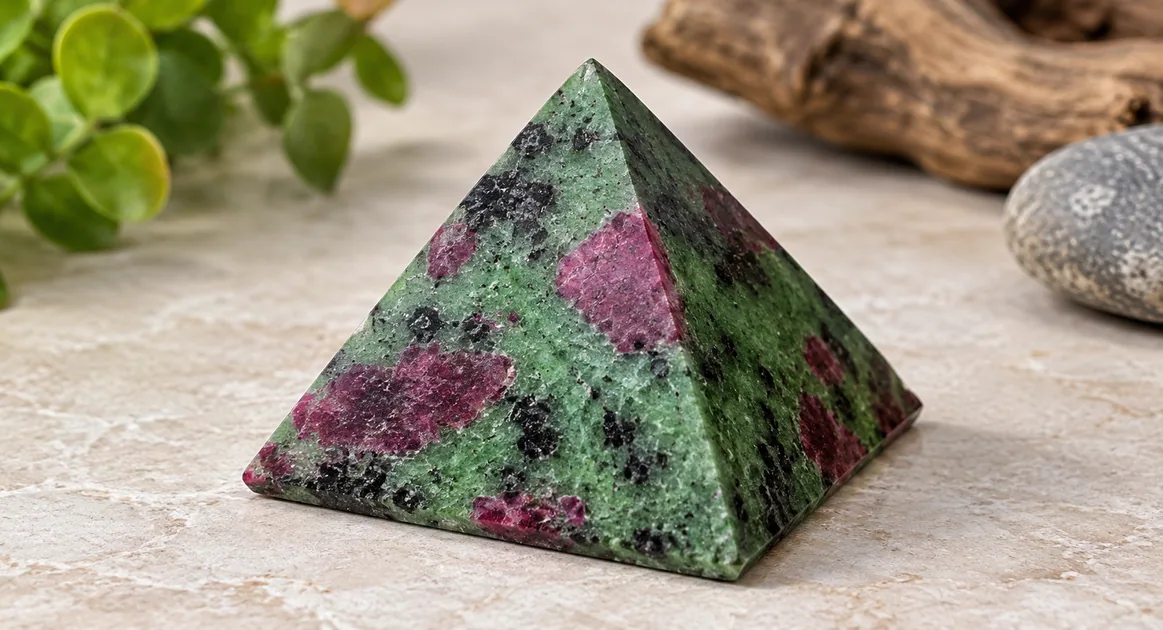
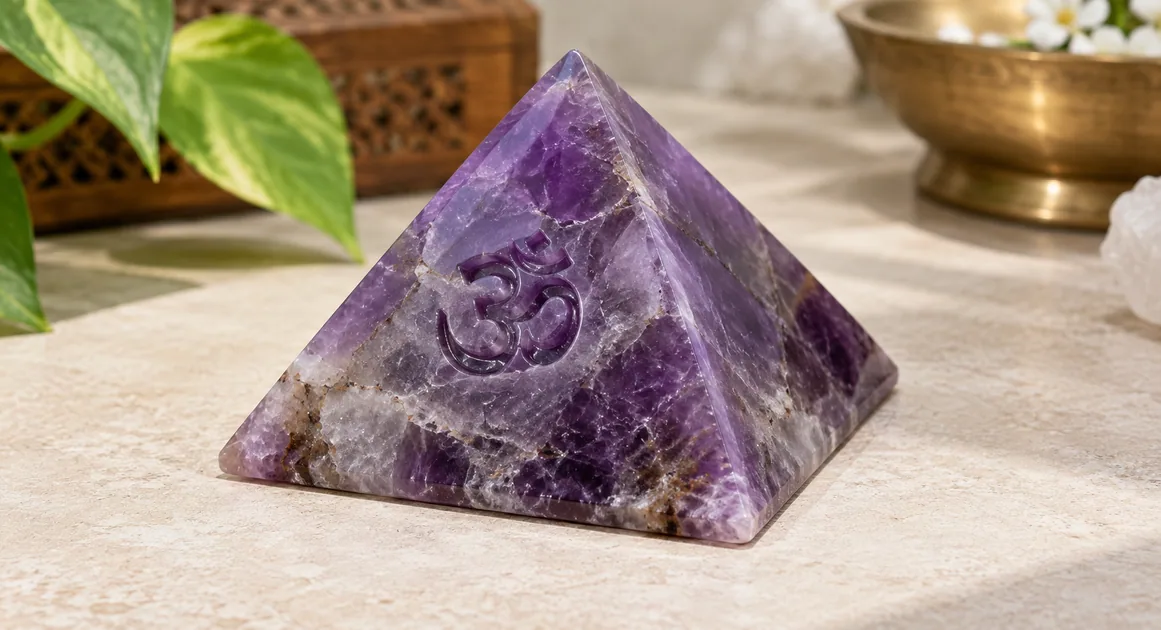
A professional eight-directions gemstone demonstration kit is a portable way to explain the directional ideas of Vastu Shastra with real gemstones. Imagine an octagonal board on a table: North points towards the top, eight zones surround the centre, and sixteen carefully identified stones form eight labelled pairs. Rather than showing a visitor a collection of pretty colours, the consultant can explain the Ashta Dik (eight directions), their Dikpalas (directional guardians), associated activities, the meaning of each gemstone and why a particular combination is chosen.
The most useful kit joins three layers of knowledge: classical directional symbolism, contemporary gemstone associations and the actual orientation of the space being discussed. It also gives the learner something practical to do: position the stones, explain each directional purpose, compare alternatives and record the recommendation in a consistent format.
This guide shows how to build a sixteen-stone demonstration kit from the beginning, how to align the board, which stones to include, how to conduct an eight-direction session and how the arrangement changes for a home, office, shop or professional training session.
1. Begin with the traditional Ashta Dikpala framework
Vastu draws on the idea that a site is not an undifferentiated rectangle. Each direction has a name, a symbolic identity and a place within the wider Vastu Purusha Mandala. In Hindu iconographic traditions, eight Dikpalas guard the directions. This provides a meaningful starting point for a gemstone demonstration, rather than beginning with colour alone.
| Direction | Sanskrit name | Dikpala | Traditional theme to explain |
|---|---|---|---|
| East (E) | Purva | Indra | Arrival of light, beginnings, initiative and auspicious opening |
| South-East (SE) | Agneya | Agni | Fire, transformation, cooking, heat and disciplined action |
| South (S) | Dakshina | Yama | Duty, limits, accountability and orderly conduct |
| South-West (SW) | Nairritya | Nirriti | Grounding, weight, endurance and boundaries |
| West (W) | Paschima | Varuna | Water symbolism, reflection, agreements and continuity |
| North-West (NW) | Vayavya | Vayu | Movement, communication, exchange and transition |
| North (N) | Uttara | Kubera (also Soma in some lists) | Resources, trade, stewardship and prosperity |
| North-East (NE) | Ishanya | Ishana | Prayer, contemplation, learning and spiritual clarity |
These direction-and-guardian names are not gemstone assignments. The directional framework is rooted in traditional iconography and Vastu-related usage; a modern tumbled-stone kit translates that framework into an educational selection. The distinction helps practitioners explain a coherent tradition rather than suggest there is only one compulsory stone for each direction.
2. Understand the centre: Brahmasthan is not a ninth direction
On a simple teaching board, the eight sectors surround a central area representing the Brahmasthan. This centre can carry the words Vastu Purusha Mandala, a simple lotus or a neutral reference symbol. Keep the north arrow clearly visible. A small centre marker helps the learner understand the relationship between all the sectors.
Some kits add a central Sphatik point, a small copper pyramid or a Yantra as a separate teaching element. Treat that as a clearly labelled optional centre piece, not one of the required sixteen directional stones. The centre is a distinct concept in Vastu, and adding a central object should not confuse the count of the kit.
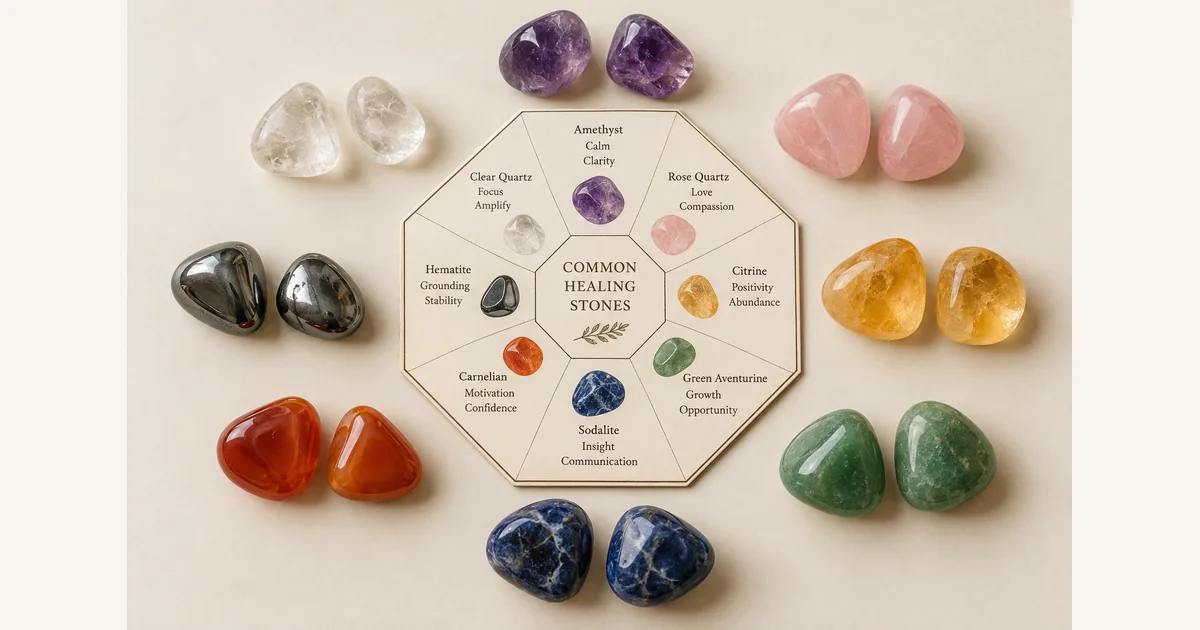
3. Suggested sixteen-stone kit: eight labelled pairs
For a compact professional kit, start with eight gemstone varieties and two matched specimens of each. The pairs permit side-by-side teaching: one may sit on the main board while the second is handled, compared under lighting or displayed on the corresponding reference card. Keep two separate IDs for every specimen, even when the material is the same.
The following is a practical, contemporary Vastu-inspired sample arrangement based on colour, stone symbolism and the directional themes above. It keeps the stone choices from the existing OmmRudraksha demonstration concept while explaining their purpose more fully.
| Direction / codes | Two suggested stones | Meaning to teach | Example discussion |
|---|---|---|---|
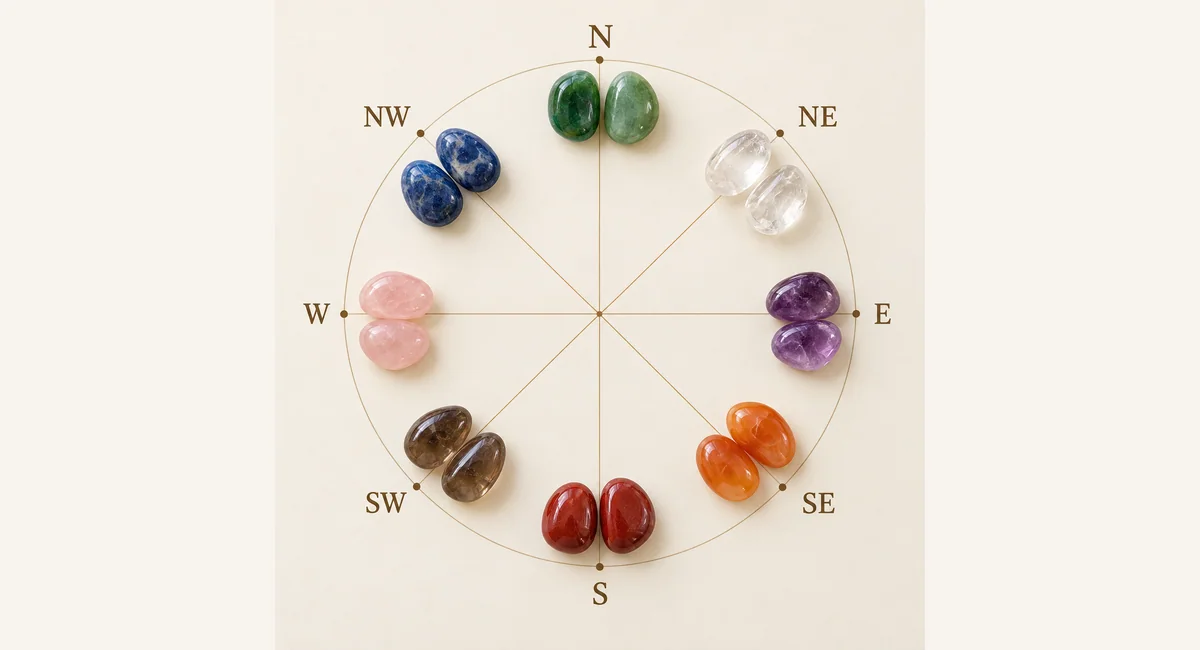
| N · N01/N02 | Green Aventurine | Growth, opportunity, prosperity and steady development | Shop resources, business planning and the Kubera association |
| NE · NE01/NE02 | Clear Quartz / Sphatik | Clarity, purity of intention, prayer and spiritual focus | Puja corner, contemplative practice and Ishanya |
| E · E01/E02 | Amethyst | Reflection, disciplined learning, inner calm and clarity of thought | Study desk, daily intention and the beginning of a task |
| SE · SE01/SE02 | Carnelian | Vitality, initiative, creativity and the fire principle | Agneya, kitchen symbolism and activity zones |
| S · S01/S02 | Red Jasper | Resolve, responsibility, courage and consistent action | Work routines, strength of purpose and Dakshina |
| SW · SW01/SW02 | Smoky Quartz | Grounding, steadiness, protection symbolism and endurance | Anchoring a household or business plan at Nairritya |
| W · W01/W02 | Rose Quartz | Harmony, compassion, relationships and reflective conversation | Shared spaces, agreements and evening reflection |
| NW · NW01/NW02 | Sodalite | Communication, understanding, movement and coordination | Customer discussion, travel planning and Vayavya |
Why two specimens? For example, a customer can hold SE02 while SE01 remains on the Agneya sector. The teacher can explain carnelian's reddish colour and its contemporary association with action without disrupting the compass layout. This is a stronger demonstration than passing a single unlabelled stone from person to person.
Stone choices may differ by practitioner. Some Vastu gemstone collections use citrine, yellow jade or pyrite for wealth discussions; others use blue agate or aquamarine for water themes, black tourmaline or hematite for grounding, and rose quartz for relationship-oriented intentions. Maintain one documented mapping per kit version so staff and learners are not taught contradictory layouts on different days.
4. How to orient the board correctly
A diagram only makes sense when the reader understands which way it faces. The simplest teaching convention is North at the top, East at the right, South at the bottom and West at the left. The corners occupy the spaces between those four directions.
| North-West Vayu / Sodalite | North ↑ Kubera / Aventurine | North-East Ishana / Sphatik |
| West ← Varuna / Rose Quartz | Centre Brahmasthan | → East Indra / Amethyst |
| South-West Nirriti / Smoky Quartz | South ↓ Yama / Red Jasper | South-East Agni / Carnelian |
For tabletop lessons, rotate the printed board so the arrow faces the room's measured North when possible. When the kit is used only to teach the concept, keep North at the top and explain that this is a reference orientation. For a real property, first mark North on its floor plan using a compass or an appropriately checked orientation reference; then transfer all eight sectors onto the plan before discussing placement.
Always check the orientation of the whole site and the actual room under discussion. In a long or irregular apartment, the north-east corner of the bedroom is not necessarily the north-east sector of the entire home. A kit that distinguishes these two levels is much more useful for consultation.
5. Choosing the board, case and labels
Use a washable, clearly printed octagonal or square board with eight direction labels, an obvious North arrow and a centre marker. A flat, non-slip surface is preferable to a glossy board on which small polished stones roll. Optional felt circles or shallow removable cups can keep each pair in place without hiding the stone.
For transport, the board should separate from the compartment case. Use sixteen individually labelled compartments, small envelopes or removable holders. Each stone receives a unique ID, not merely the name of its direction. A usable register should record:
- Specimen code: NE01, NE02, N01, N02 and so on.
- Actual material: e.g., clear quartz (Sphatik), not only “white energy stone”.
- Colour and appearance: natural, dyed, treated, mixed or unknown where relevant.
- Traditional/contemporary association: the meaning used in this particular teaching system.
- Direction: written name and abbreviation; do not rely on colour alone.
- Dimensions or weight: measured when catalogued; maintain replacement records.
- Version of the mapping: for example, “Eight-Direction Teaching Set — Version 1”.
Why does versioning matter? A consultant may later replace the West pair with blue agate to emphasize Varuna and water symbolism. That is a meaningful change to the teaching method. Mark it as Version 2 and update the eight-direction handout instead of silently changing the kit.
6. Assemble the kit step by step
- Decide the learning objective. A beginner's kit teaches eight directions; a professional kit may compare gemstone choices for prosperity, puja, communication and grounding.
- Confirm stone identification. Photograph each actual specimen, record its material and note any treatment information supplied. A labelled sample should correspond to the stone physically delivered.
- Assign two codes to each direction. Put the pair in its own compartment. Make the code visible even when the case is open on a crowded worktable.
- Print the directional guide. Include Sanskrit names and guardians, not merely coloured arrows. Add a separate legend for the gemstone meanings used in this version.
- Set North and arrange clockwise. With the board oriented, demonstrate North, North-East, East, South-East, South, South-West, West and North-West; or begin at East and explain the traditional order. Be consistent.
- Practice one interpretation. Ask the learner to explain the direction, its guardian, why the sample stone was chosen and what alternative would fit a different intention.
- Document and repack. Photograph the finished board, check all sixteen sample codes and return each pair to the matching compartment.
7. Three worked demonstrations
Example A: Two-bedroom apartment — prayer, study and family harmony
Consider a fictional Bengaluru apartment with an entrance at the east, a shared living room, a study desk in the eastern half and a small puja shelf toward the north-east. The family is not asking for the same symbol everywhere: their priorities are daily prayer, consistent study and calmer shared discussions.
Step 1: mark the apartment's North and divide the overall floor plan into eight approximate sectors. Step 2: bring the NE Sphatik pair to the board and explain Ishanya's association with prayer and spiritual clarity. Step 3: use the E amethyst pair to illustrate reflection and the intention to study regularly. Step 4: use the W rose quartz pair to open a discussion about gentleness and relationships within shared spaces.
The teaching value lies in why these choices differ: Sphatik represents clarity in the puja discussion; amethyst is used here as a contemporary symbol for focus; rose quartz introduces the language of harmony. A final written note can say which locations the family actually has available and whether a small tree, a pair of tumbled stones or a simple display is most suitable for its room and budget.
Example B: Jewellery showroom — prosperity, conversation and steady operations
Imagine a small jewellery showroom with its billing desk close to the north side and a customer-discussion area toward the north-west. The owner wants a coherent Vastu-themed explanation for the staff rather than an assortment of loosely named “wealth crystals”.
North / Kubera: use the green aventurine pair to discuss stewardship of resources, commerce and growth intentions. North-West / Vayu: use sodalite to explain communication, movement and customer exchange. South-West / Nirriti: place smoky quartz on the diagram to illustrate stability, inventory discipline and continuity. South-East / Agni: use carnelian for initiative and purposeful work.
Then take the floor plan out: locate the actual direction of the counter, staff storage and entrances. Explain how the same four symbolic themes might inform practical decisions such as keeping the consultation desk tidy, a display visible, the cash area organised and customer movement unobstructed. The demonstration supports a focused business discussion while retaining the spiritual vocabulary customers expect.
Example C: Professional teaching session — compare three interpretations of North-East
A trainee draws the NE Sphatik pair and states that “North-East must always use white quartz.” Instead of stopping there, ask three questions. First: what does Ishanya traditionally represent? Second: why is clarity a suitable theme for Sphatik? Third: could an amethyst specimen, a prayer symbol or no physical stone also serve the intended practice?
This exercise separates the direction's traditional identity from the teacher's chosen gemstone correspondence. Students learn the Sanskrit context, interpret the specific kit accurately and understand how to explain variations in a consultation.
8. How to customise for different purposes
The base kit should remain stable, but its reference cards can demonstrate different intentions without confusing the physical layout.
| Purpose | Direction(s) to discuss | Stone options for comparison | Teaching point |
|---|---|---|---|
| Prosperity and business planning | North, plus the site's actual work areas | Green aventurine, citrine, pyrite | Distinguish Kubera's directional symbolism from several contemporary abundance-stone traditions |
| Prayer, meditation and clarity | North-East | Sphatik, amethyst | Discuss Ishanya and how a material supports personal practice or altar symbolism |
| Initiative and creativity | South-East | Carnelian, sunstone | Explain the Agni principle and the meaning of warm-coloured stones |
| Stability and protection symbolism | South-West | Smoky quartz, hematite, black tourmaline | Compare grounding meanings, materials and the practical character of a room |
| Communication and transitions | North-West | Sodalite, blue agate | Explain the Vayu theme and different colour choices used by practitioners |
| Relationships and peaceful interaction | West or shared-space focus | Rose quartz, blue agate | Show that intention-led modern stone selection can vary within the same directional model |
If a customer chooses a different stone from the base set, document that choice as a recommended variation, not an unnoticed change to the demonstration kit. This is particularly useful when a customer owns a gemstone tree or a tumbled-stone set already and wants to understand its place in the Vastu discussion.
9. Do not confuse an eight-direction kit with Navagraha, Navaratna or chakra sets
These reference systems overlap in a spiritual shop but answer different questions. Ashta Dik asks which direction is being discussed; Pancha Mahabhuta asks which elemental symbolism is relevant; Navagraha works with the nine Grahas of Jyotish; and a seven-chakra set is organised around seven subtle centres in modern chakra practice. The fact that some gemstones appear in more than one set does not make the systems identical.
| Set | Organising principle | Typical teaching use |
|---|---|---|
| Eight Directions / Ashta Dik | Eight compass sectors and Dikpalas | Orientation, directional symbolism, room and site discussion |
| Five Elements / Pancha Mahabhuta | Prithvi, Jala, Agni, Vayu, Akasha | Elemental meanings and comparing stone qualities |
| Navagraha / Navaratna | Sun, Moon, Mars, Mercury, Jupiter, Venus, Saturn, Rahu, Ketu | Planetary gemstone associations and chart-related discussion |
| Seven Chakra | Seven energy centres and colour groupings | Contemplative and chakra teaching arrangements |
In particular, a tumbled-stone reference set containing nine modern colour-coded specimens is not automatically the same thing as a traditional Navaratna jewellery composition. Keep the name, material list and learning objective specific.
10. Common mistakes in a professional demonstration
- Starting without a North arrow: the entire board then loses directional meaning.
- Mixing the site plan and room plan: label which one is being demonstrated.
- Calling a modern stone assignment an ancient rule: explain the Dikpala framework and identify the stone sequence as the kit's chosen teaching interpretation.
- Using colour instead of material identification: green jasper and green aventurine are not interchangeable names.
- Forgetting the second stone of a pair: a professional set needs a printed count and specimen IDs.
- Changing stones without updating reference cards: the spoken explanation, board and inventory should agree.
- Using every symbol at once: keep Ashta Dik, Navagraha and chakra cards in separately labelled sections.
- Ignoring the customer's actual room: discuss available space, furniture, light, maintenance and the customer's devotional preferences along with the chosen symbolism.
Frequently asked questions
How many stones are needed for an eight-directions Vastu kit?
Eight stones are sufficient to illustrate the directions, one per sector. A sixteen-stone professional kit uses two per sector, allowing comparison and handling without moving the board specimen. Additional variants can be stored separately.
Is there one compulsory gemstone for North-East or South-East?
There is a strong traditional identity for the directions—such as Ishanya in the north-east and Agneya in the south-east—but modern tumbled-stone assignments differ among practitioners. The chosen kit should state its mapping clearly and explain its symbolism.
Does the North arrow point to the top of the printed board or the actual room's North?
On an educational diagram North is printed at the top. For a location-based consultation, turn the board or floor-plan overlay to match the real property's measured orientation; do not assume the paper is aligned just because it sits on a table.
Can a gemstone tree replace the two stones in a directional demonstration?
A gemstone tree can illustrate the same intended theme in a home or business setting, but it is usually bulkier and may contain mixed stone chips. Keep labelled tumbled stones for precise teaching and discuss the tree separately as a product selection.
Should the kit include a copper pyramid or a Yantra?
Only if the session specifically includes pyramid or Yantra teaching. A centre piece may enrich the explanation of the Brahmasthan, but keep it separate from the sixteen counted directional specimens.
How does a professional explain a different stone recommendation?
Name the direction and its traditional association first; then name the customer's intention; finally compare the available gemstone symbols and materials. Record which interpretation is being followed so the recommendation is understandable and repeatable.
A kit worth teaching with
A successful eight-directions gemstone kit is not defined by its box or by sixteen attractive colours. Its value is the way it makes Ashta Dik, Dikpalas, directional purpose, gemstone symbolism and real-world Vastu choices understandable. Build a reliable base set, give each specimen an identity, keep the diagram oriented, explain why each stone was selected and show practical applications in homes and commercial spaces. That turns a simple collection into a working reference for serious learning and consultation.
Continue reading
- Eight Directions Gemstone Arrangements Explained
- How to Label and Organize a Tumbled Stone Reference Collection
- Professional Crystal Kit Packaging, Transport and Replacement
Explore the existing Vastu and gemstone collections for wider context.