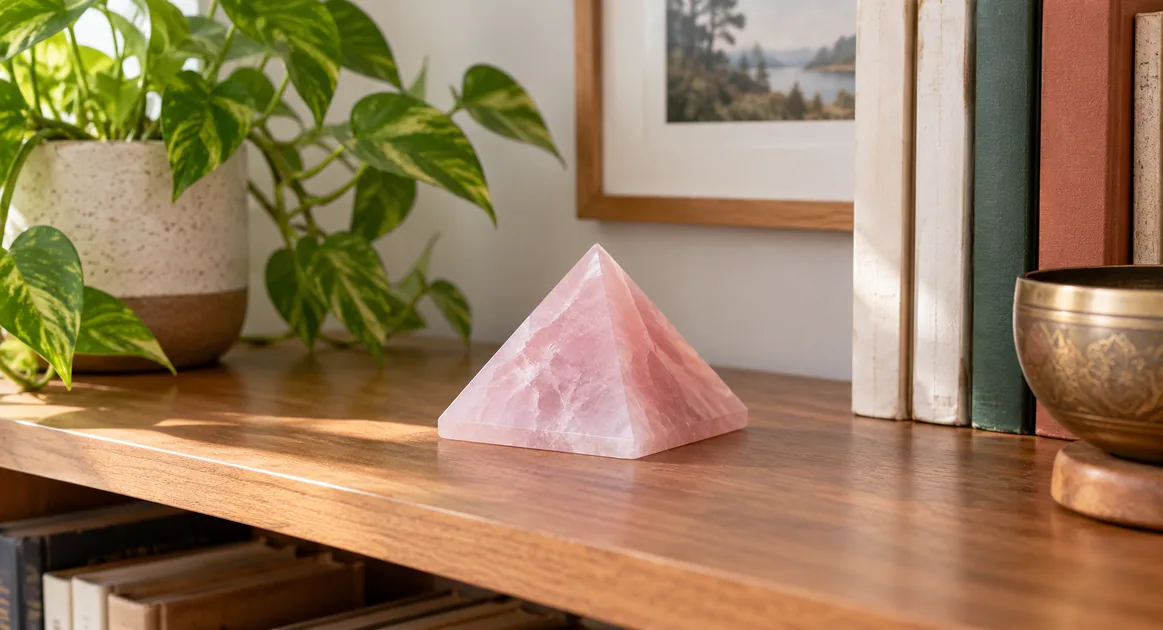
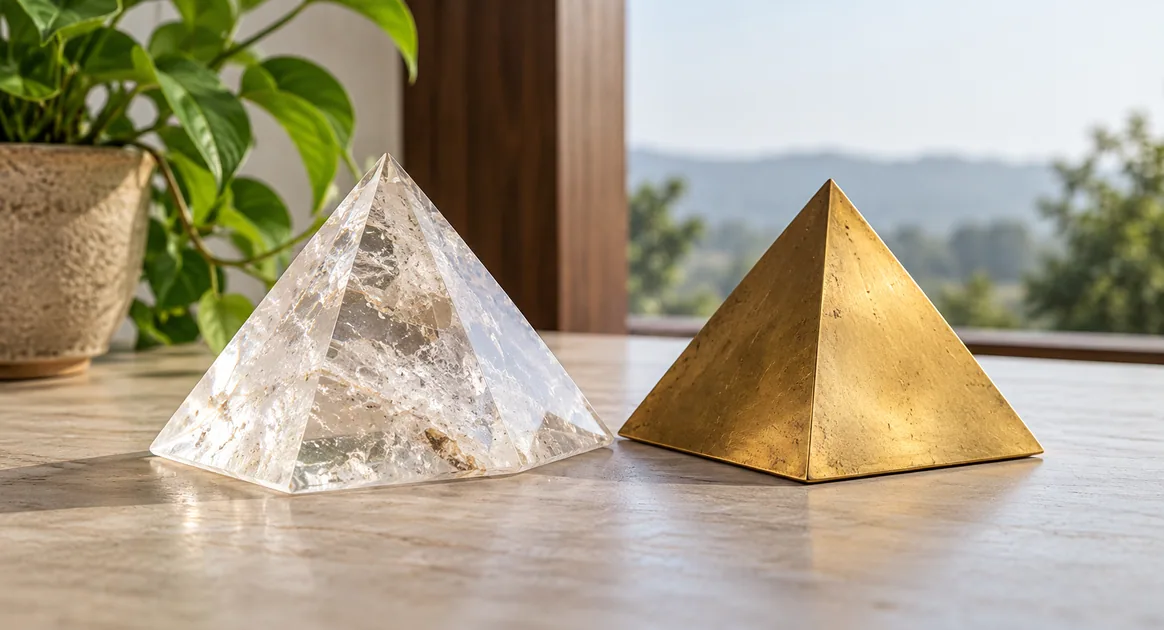
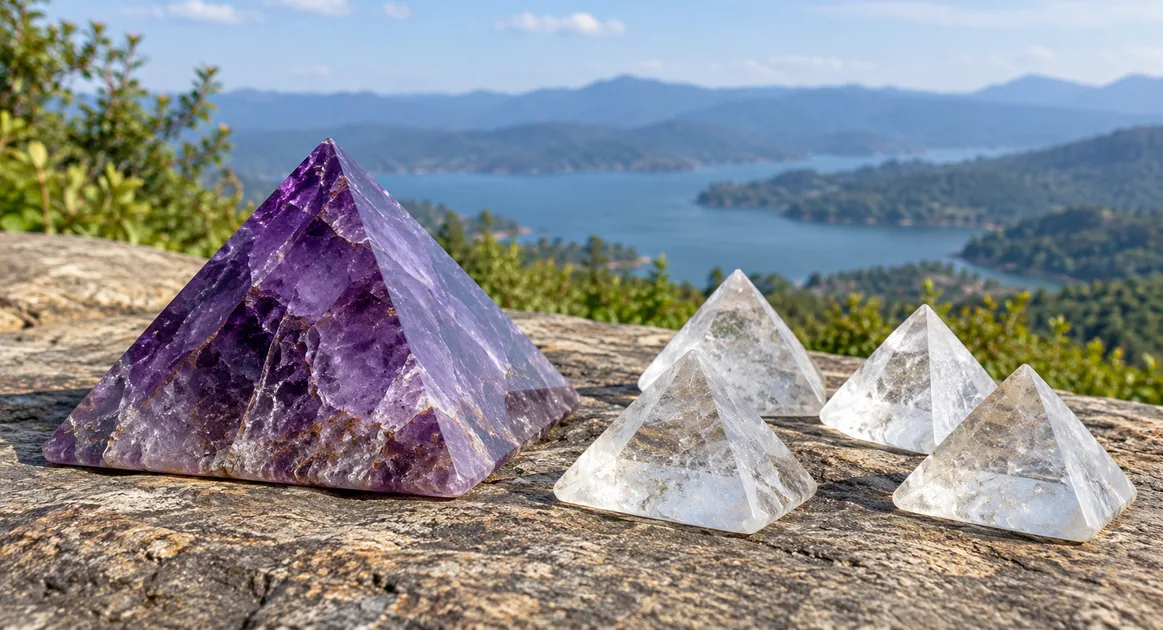
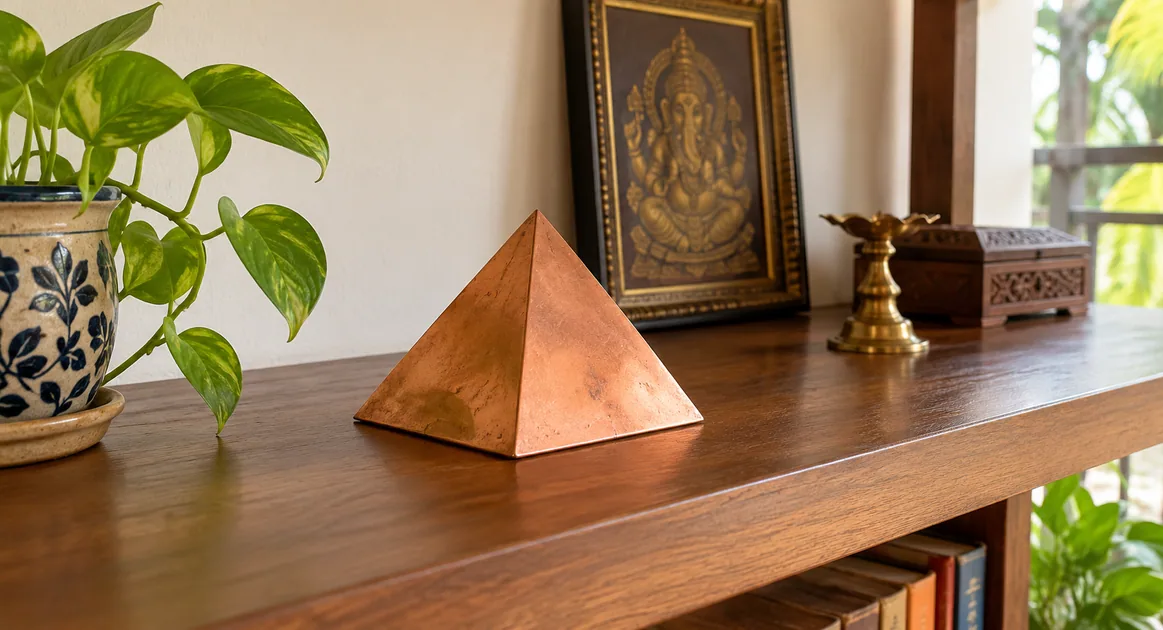
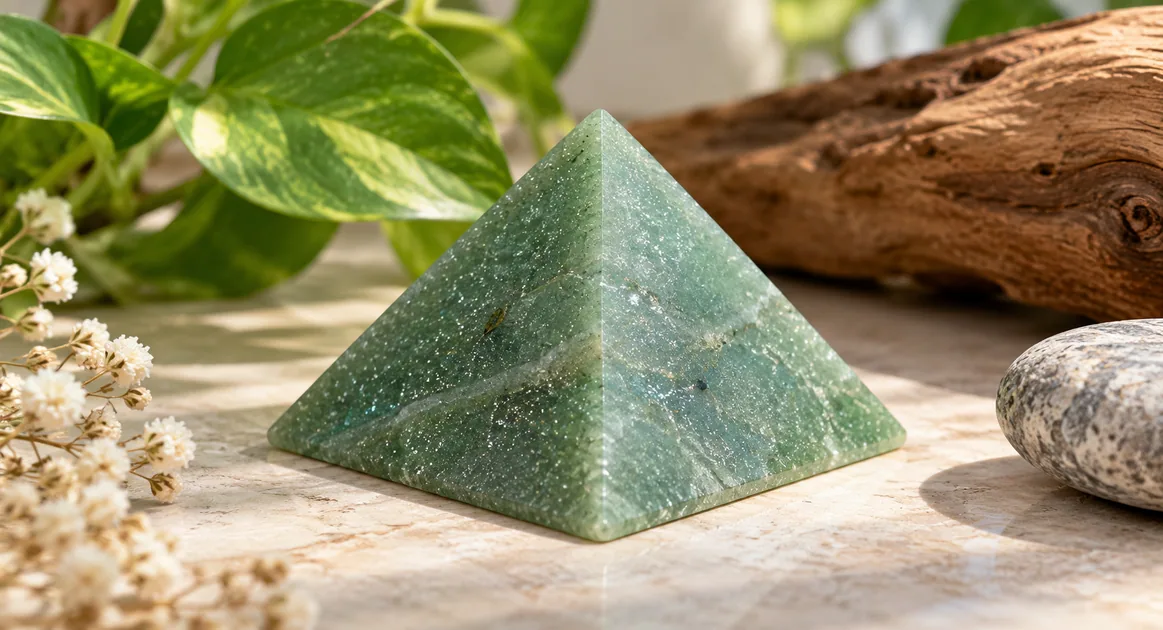
Green aventurine pyramids unite a quartz-rich green gemstone with a carefully carved four-sided form. Their appeal includes gentle green colour, fine reflective specks, and the symbolism of growth and purposeful action in contemporary Vastu and crystal traditions. Yet a product described simply as “green stone” or “Indian jade” may be made from something quite different. The most useful questions concern what the material really is, why it glitters, whether its colour has been treated, and how the actual pyramid was finished.
This comprehensive guide connects gemmological identification with traditional Indian direction symbolism, practical placement, buying checks, cleaning and safe packing. It distinguishes natural aventurescence from artificial metallic glitter; green aventurine from jade, serpentine and green glass; and a meaningful Sankalpa from an automatic promise of business success. Examples include a Bengaluru apartment, a jewellery counter and a professional Vastu reference kit.
1. What is green aventurine?
Aventurine is a commercial gemstone name commonly applied to translucent to opaque quartz or quartzite containing many tiny reflective mineral inclusions. The dominant substance is silica, SiO2, but green specimens commonly contain chromium-bearing green mica called fuchsite. Small plates of mica contribute colour and flash as a stone is tilted in light. The inclusions may be dispersed evenly, concentrated in cloudy patches, or relatively subdued.
The name does not guarantee that every green carving sold as aventurine contains conspicuous mica flashes. Nor does a strong emerald-green colour establish fuchsite, a particular country of origin, superior grade or authenticity. Some natural specimens look quiet under indoor illumination, and sellers may also use the name loosely for dyed green quartz-rich material. A careful seller explains which description is actually supported for the item.
| Property | Typical green aventurine | Why it matters |
|---|---|---|
| Main material | Quartz-rich or quartzite aggregate | Different from jadeite, nephrite and serpentine |
| Green component | Often fuchsite mica | May colour the stone and create sparkle |
| Mohs hardness | Typically about 6.5–7; inclusions can affect durability | Resists ordinary wear but corners can still chip |
| Lustre | Vitreous to somewhat waxy; reflective specks | Appearance depends on polish and lighting |
| Transparency | Translucent to nearly opaque | Backlighting can exaggerate saturation |
| Pyramid form | Man-made carving of mineral material | Geometry is not a naturally grown quartz pyramid |
2. Why the stone sparkles: aventurescence and mica
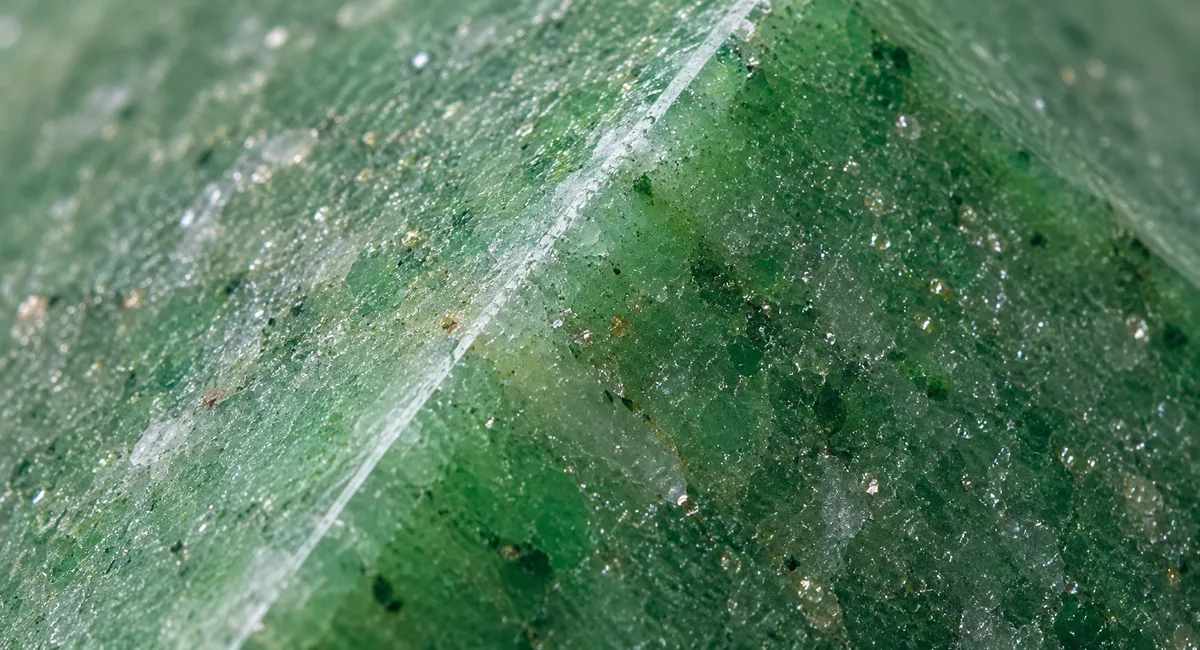
Aventurescence is a glittering optical effect caused by light reflecting from tiny plate-like inclusions inside a material. In green aventurine, chromium-bearing fuchsite mica is a frequent cause. When light hits different plates, some shine momentarily as the object is rotated. It is not an electrical glow, a coating that must be rubbed off or a universal indicator of higher spiritual potency.
Look at the broad pyramid face under diffuse daylight, then tilt it slowly against a single lamp. Natural reflective particles may appear irregular in size, orientation and distribution. The precise effect depends on the amount and orientation of mica, cutting direction, polish and the angle of illumination. A photograph with a hard spotlight can make a modest stone seem extravagantly glittery. The opposite is equally possible: a genuine softly sparkling specimen may look matte in a poorly lit listing.
The word “mica sparkle” is useful editorially because it alerts the buyer to a real physical feature. It should not become a promise that every green aventurine pyramid will sparkle uniformly. Quartz-rich stone with a large proportion of inclusions can also contain weaker boundaries or small pits where flakes meet the surface; stone quality and carving finish still matter.
3. Green aventurine, jade, serpentine and green glass
Green colour alone does not identify a gemstone. The trade name “Indian jade” is sometimes applied to green aventurine, although true jade means jadeite or nephrite, with different mineralogical structures and physical properties. Serpentine is another green stone that often appears in ornamental carvings. Coloured glass and resin composites can be made into similarly shaped pyramids. If material identity affects price, ask the seller for evidence or appropriate gemmological evaluation rather than assuming based on a sales photograph.
| Material | Typical distinction | Buying question |
|---|---|---|
| Green aventurine | Quartz-rich with possible fine reflective mica flakes | Are the inclusions visible under neutral lighting? |
| Jadeite jade | Different mineral, often with interlocking granular structure | Is this specifically identified as jadeite? |
| Nephrite jade | Tough amphibole aggregate with fibrous texture | Is this nephrite or merely “Indian jade”? |
| Serpentine | Separate mineral group; often waxy, variable green | What is the precise stone identity? |
| Green glass | May show bubbles, flow texture and artificial colour | Is the product manufactured glass? |
| Dyed quartzite or composite | Appearance may result from pigment or bonding | Are dye, resin and assembly disclosed? |
A green stone need not be genuine aventurine simply because the product title uses the word “crystal.” Avoid do-it-yourself destructive scratch or chemical tests on a polished retail carving. Accurate source documentation, magnified observation and a knowledgeable gemmologist are safer for important purchases.
4. Natural colour, dye, resin and surface treatment
A clear product description distinguishes the stone’s natural body colour from anything added later. Green mineral inclusions can naturally colour aventurine; however, colouring, oiling or polymer-related treatments may be found in the wider low-cost gemstone trade. Such treatments do not automatically make a decorative item unusable, but undisclosed enhancement prevents an informed comparison between pieces.
Examine the underside, edge intersections, pores and any pale veins. Unusually concentrated pigment along tiny fractures can raise a question about dye, but appearance alone is not a definitive test. Similarly, a uniformly vivid colour may be natural or enhanced. A seller should disclose what is known and avoid asserting “untreated” when no appropriate evidence exists. If the object is sold as solid single-piece aventurine, ask whether cracks were filled or parts joined before polishing.
| Check | What to request | Reason |
|---|---|---|
| Material name | Quartz-rich green aventurine, with details when available | Avoid ambiguous “green lucky stone” labels |
| Colour | Natural, enhanced or unknown stated plainly | Avoid unsupported treatment promises |
| Construction | Single carving versus glued, filled or reconstituted | Know what the actual object contains |
| Photographs | Neutral light, underside, apex and edges | Inspect colour and physical condition |
| Scale | Base width, total height and weight | Confirm real dimensions |
| Care | Treatment-specific handling advice | Protect coatings and joins |
5. Inspect the actual pyramid: faces, apex and base
A square-based carved pyramid has four triangular sides rising from a base to an apex. Material identity and geometric accuracy are separate concerns: even a genuine quartz-rich carving can have an uneven base, chipped tip, damaged edge, visible repair or poor finish. Ask for photographs of the actual item or for a clear explanation that the image is representative of a batch. Compare all four faces, not just the most polished side.
A modestly softened point is not necessarily a defect; it can reduce accidental snagging in a household setting. A newly broken point, however, should be identified. Look for pitting that seems to follow inclusions, obvious open fissures, unpolished scratches and artificial surface shine that hides rough work. Tilt the base on a level tabletop: a finished display should stand without rocking. For professional work, record the exact dimensions and the label used by the supplier.
Natural variation in the amount of fuchsite and colour should be expected across a batch of aventurine stone. Treat such variations as characteristics to describe, not automatic grounds for an invented premium “energy grade.” A single-piece carving, composite, hollow form and painted resin pyramid are distinct product types; the listing must not blur those distinctions.
6. What green aventurine symbolizes in Vastu and crystal traditions
Green frequently conveys growth, foliage, renewal, continuity and the hope of flourishing activity. In contemporary crystal practice, green aventurine is commonly associated with opportunity, good fortune and a prosperous outlook. Those meanings can make it an attractive object for a home, shop, study or office. The association is a symbolic and devotional interpretation; it is not a laboratory property of quartz, nor evidence that a specific carving will increase revenue.
Indian tradition contains several distinct frameworks that should not be collapsed into one universal chart. Vastu Shastra considers the configuration and use of space; Pancha Mahabhuta refers to the five elements; directions may be discussed with Ashta Dikpala concepts. Sankalpa expresses a chosen intention, while Lakshmi and Kubera belong to important devotional understandings of abundance and stewardship. A green aventurine pyramid may be used as a contemporary decorative focal point within those practices, but the carved object is not automatically a classical consecrated yantra or an obligatory traditional remedy.
For a family wishing to mark a new shop opening or a student setting an intention for disciplined study, the stone can provide a visual reminder of intention and responsible action. Its symbolism is most meaningful when explained without promising specific financial, medical or astrological outcomes.
7. Directional placement: north, east and northeast are not universal rules
Some modern Vastu practitioners recommend green stones in a north- or east-associated arrangement, connecting green colour to renewal, commercial activity or the natural world. Other household traditions use different colour and material arrangements. A claim that all aventurine must be in one direction ignores the actual building plan, the household’s lineage of practice, the purpose of the room and the physical needs of the object.
When consulting on a space, first identify directions accurately, preferably against a reliable plan or measured compass orientation. Note the entrance, movement pattern, existing puja area, available shelf space and moisture conditions. Ishanya (northeast), Agneya (southeast) and other direction names should be used precisely, not as interchangeable words. A compact pyramid should never obstruct a walkway or be placed on an unstable sill merely to follow a generalized diagram.
| Setting | Possible symbolic role | Practical placement |
|---|---|---|
| Living room | Renewal and family harmony | Dry stable shelf clear of busy paths |
| Study or work desk | Focus on constructive work and Sankalpa | Low-profile corner away from impact |
| Shop reception | Welcoming prosperity symbolism | Secure surface outside the busiest handling area |
| Puja shelf | Personal intention alongside established practice | Separate from oil, water and flame |
| Professional consultation | Material and Vastu example for discussion | Labelled specimen with context-specific direction notes |
8. Green colour, Anahata and planetary interpretations
In some contemporary chakra systems, green crystals are used to symbolize the Anahata or heart-centre theme of balance, empathy and relationships. This is one interpretive layer, not a mineralogical classification or a claim that green aventurine is a prescribed substitute for every heart-centre practice. Different yoga, devotional and popular crystal sources use different correspondences.
Likewise, Jyotish gemstone prescription is a specific chart-based discussion involving Graha, Rashi, Lagna, Dasha and other factors. A mass-market green aventurine decorative pyramid should not automatically be treated as the same object as an individually recommended planetary gemstone such as emerald for Budha. The colour resemblance may inspire discussion, but it does not establish equivalence of mineral identity, customary use or horoscope-based recommendation.
Appropriate writing can retain the full vocabulary—Sankalpa, Anahata, Budha, Lakshmi, Kubera, Pancha Mahabhuta—while identifying which connections arise from traditional sources, modern adaptations or a family’s devotional practices. This avoids both unnecessary dismissal of tradition and unsupported one-size-fits-all instructions.
9. Worked example: an apartment in Bengaluru
Consider a family with a small flat in Bengaluru. They want one attractive green gemstone object for a study corner and prefer a quiet, uncluttered appearance. A palm-sized square-base green aventurine pyramid offers an intentional focal point without taking over the desk. They select a specimen with a stable base, a sound apex and clear seller information about its quartz-rich composition. Under daylight the mica gives a gentle rather than dramatic sparkle.
Before placing it, the family checks the desk’s actual use: laptops, books, water bottles and frequent movement create avoidable knock and spill risks. A rear dry shelf is safer than an exposed desk edge. The family may incorporate a short daily Sankalpa at the beginning of work; there is no need to soak the stone, put it in a glass of drinking water or move it constantly based on generic online direction charts. During monsoon months, the item can be inspected when ordinary shelf cleaning is done.
10. Worked example: a jewellery showroom and shop counter
A Bengaluru jewellery showroom wants a green display pyramid near the consultation area, with a modest traditional prosperity theme. The owner could place it on a labelled stand alongside a genuine material description: “Green aventurine, quartz-rich stone with reflective inclusions; carved pyramid.” Staff should not imply the pyramid contains emerald, certified jade or an individually assessed planetary gemstone unless that is independently established.
On a counter, the highest risk may be repeated contact with metal jewellery, cleaning solutions or display movement. Use a clean separate stand and keep it away from coin trays and hard metal fixtures. The object can complement Lakshmi or Kubera-related auspicious intentions where relevant to the owner’s traditions, but honest marketing should focus on craftsmanship, beauty, material and context rather than guaranteed sales or customer attraction.
11. Worked example: a professional Vastu gemstone reference kit
A professional reference kit can include green aventurine alongside jadeite, nephrite, serpentine, malachite, green glass and other safely identified green materials. The point is not to suggest that these stones are interchangeable; rather, the group teaches how a colour theme can conceal several different mineral groups, treatments and durability requirements. Each piece should carry an ID label, an approximate hardness note where supported, a known-treatment field and a handling instruction.
Use magnified photographs to demonstrate fuchsite sparkle rather than destructive scratch tests. Compare a representative green aventurine pyramid with a green aventurine tumble and a carved jade specimen, explaining that format is different from identity. A consultant can discuss Vastu directions separately from the gemmological exercise, keeping the teaching transparent to clients who value both Indian traditions and sound material information.
12. Cleaning and maintaining an aventurine carving
Quartz-rich green aventurine is generally more abrasion-resistant than calcite or gypsum, yet sharp carved edges remain vulnerable to impact. For routine cleaning, first dislodge dust and grit with a clean soft dry brush. Then use a clean microfibre cloth gently. Avoid rubbing surface grit hard against the polish. A little mild moisture can be suitable for a known untreated sound stone, followed by immediate drying, but treatments, unknown adhesives, fillings or fragile inclusions change the advice.
Do not assume every crystal benefits from salt-water soaking, acids, steam cleaning or ultrasonic equipment. These methods can compromise coatings, colour treatments, bonded sections or polish. Keep the piece away from harsh bathroom cleaners, strong sunlight for a treated or unknown colour, repeated high heat, and wet floral or puja arrangements. In a devotional setting, dry respectful handling is a practical alternative to immersing the stone in ritual liquids.
| Care situation | Recommended approach | Avoid |
|---|---|---|
| Daily dust | Soft dry brush; gentle clean cloth | Dragging grit under pressure |
| Unknown treatment | Confirm seller instructions first | Soaking or chemical experimentation |
| Puja or office display | Separate from liquids and flames | Placing in wet trays or near oil splashes |
| Moving between rooms | Hold securely under the base | Grabbing the pointed apex |
| Long-term storage | Individual padded dry compartment | Loose contact with metal and harder objects |
13. Shipping, handling and storage
Wrap each pyramid in a clean, non-abrasive material and support the base and point with a shaped insert. Several pyramids should not be packed loose in one bag: quartz against quartz can chip edges even when the material is relatively hard. A well-designed retail package identifies the actual item, carries the correct gemstone name and avoids tape touching the polished faces. Photograph any pre-existing inclusion pit or natural colour variation before dispatch if condition might be disputed later.
For shops, record the SKU, measured base width, height and weight of the finished carving. Keep stock on dry shelves away from dripping air-conditioner lines and wet cleaning stations. During transport, a short checklist for apex condition, edge damage, rocking base and surface coatings is more useful than an undifferentiated “natural stones may vary” statement.
14. Buying questions: value, workmanship and trust
Before ordering, ask what precise mineral material is supplied, whether the stone is carved from one piece, what treatments are known, and whether the photos represent the item to be delivered. Request normal-light images of the front, rear and underside with a ruler. A visibly sparkling specimen may be desirable aesthetically, but higher sparkle does not establish superior Vastu suitability, higher quartz purity or rare origin.
Price should be understood through dimensions, weight, workmanship, condition, treatment disclosure and the supplier’s actual sourcing confidence. Avoid broad rankings such as “Grade A+++ energy” that cannot be independently assessed. If a seller advertises a rare provenance, an untreated guarantee or a specific mineral identification at a substantial premium, ask what record or expert finding supports it.
| Seller claim | Useful follow-up |
|---|---|
| “Natural green aventurine” | Is the colour natural and are treatments known? |
| “Indian jade” | Is this quartz aventurine, nephrite or jadeite? |
| “Premium sparkle” | Can you show neutral-light and angled-light photographs? |
| “One-piece carving” | Can you show all faces, base and any repair lines? |
| “Correct Vastu direction” | Which tradition, building layout and purpose inform the recommendation? |
| “Exact size” | What are actual base width, height and finished weight? |
15. Frequently asked questions
Is green aventurine a form of quartz?
Typically yes: it is a quartz-rich or quartzite material that may contain small reflective mineral inclusions, commonly fuchsite mica.
What creates the green glitter?
Many pieces owe the glints to green mica platelets reflecting light. The effect is called aventurescence, and its visibility changes with the viewing angle.
Can real aventurine have very little sparkle?
Yes. Inclusion size, concentration, orientation, lighting and polishing all affect the observable effect.
Is green aventurine the same as jade?
No. “Indian jade” can be a trade label for aventurine; true jade refers to jadeite or nephrite.
How is it different from emerald?
Emerald is a green variety of beryl, while aventurine is quartz-rich with inclusions. Neither the colour nor a sales title makes them equivalent.
Does a greener colour guarantee better quality?
No. Natural variation, lighting and possible colour treatment all affect appearance. Evaluate actual material, condition and disclosure.
Can green aventurine be dyed?
Enhancement is possible in the broader trade. Ask the supplier for treatment information rather than judging on colour alone.
Is a visible mica pit a defect?
Some surface pits can occur where inclusions intersect polished faces. Large open cavities, loose particles or undisclosed repair deserve closer examination.
What does the green pyramid symbolize?
In contemporary crystal and Vastu usage it may symbolize growth, renewal, opportunity and purposeful action. The meaning is interpretive.
Must a green aventurine pyramid face north?
There is no single universal rule. Directional choices depend on the chosen Vastu tradition, actual room layout and use of the object.
Is it a substitute for an emerald Jyotish gemstone?
No automatic substitution is justified. A planetary gemstone recommendation is a separate chart-based matter.
Can I keep one in a puja corner?
Yes as a personal decorative object where appropriate; use a stable dry shelf and keep it out of ritual liquids and strong heat.
Can I soak it in salt water?
Avoid soaking, especially when treatment or construction is unknown. Gentle dry care is a safer default.
What is the best way to ship one?
Wrap it individually with a fitted support protecting the tip and all four edges.
How should a professional kit identify it?
Label the material as green aventurine quartz/quartzite where supported, include treatment status and handling notes, and keep Vastu interpretation separate.
16. Putting material knowledge and traditional meaning together
A trustworthy green aventurine pyramid guide should make it easy to identify the material, inspect the carving, respect an authentic personal or traditional practice and keep the item in good condition. Reflective mica inclusions explain the sparkle; they do not measure fortune. Vastu symbolism can enrich the placement decision, while exact size, honest treatment disclosure and safe handling make the purchase practical. Ask for clarity rather than a universal lucky grade, and choose a well-finished object suited to the room and your intention.
Reference basis: mineralogical and gemmological explanations of aventurine, quartzite, fuchsite and aventurescence were checked against geology and gem-identification references. External source names are supplied for research context without adding unnecessary outbound commercial hyperlinks.
Explore existing OmmRudraksha collections
Browse Vastu for the existing collection, or explore gemstone products for other material forms. Each product’s construction and care information should guide your choice.