Tumbled stones for Vastu are smooth, polished pieces of natural mineral or rock selected for traditional colour symbolism, the Pancha Mahabhuta (five elements), the eight directions, personal worship and contemporary crystal practices. Their appeal is not only their attractive finish: the point of a thoughtful Vastu arrangement is to connect a specific intention with a specific space and a suitable material. A single Sphatik pebble near a meditation seat, a green aventurine stone on an office desk, and an eight-direction reference set are three different applications.
This guide explains the traditional ideas behind direction and element selection, offers stone-by-stone associations, and walks through actual home, shop and professional Vastu examples. It also shows how to choose between individual stones, multi-stone arrangements and reference kits. The guide also includes three worked situations and links to OmmRudraksha's individual stones and curated Vastu sets.
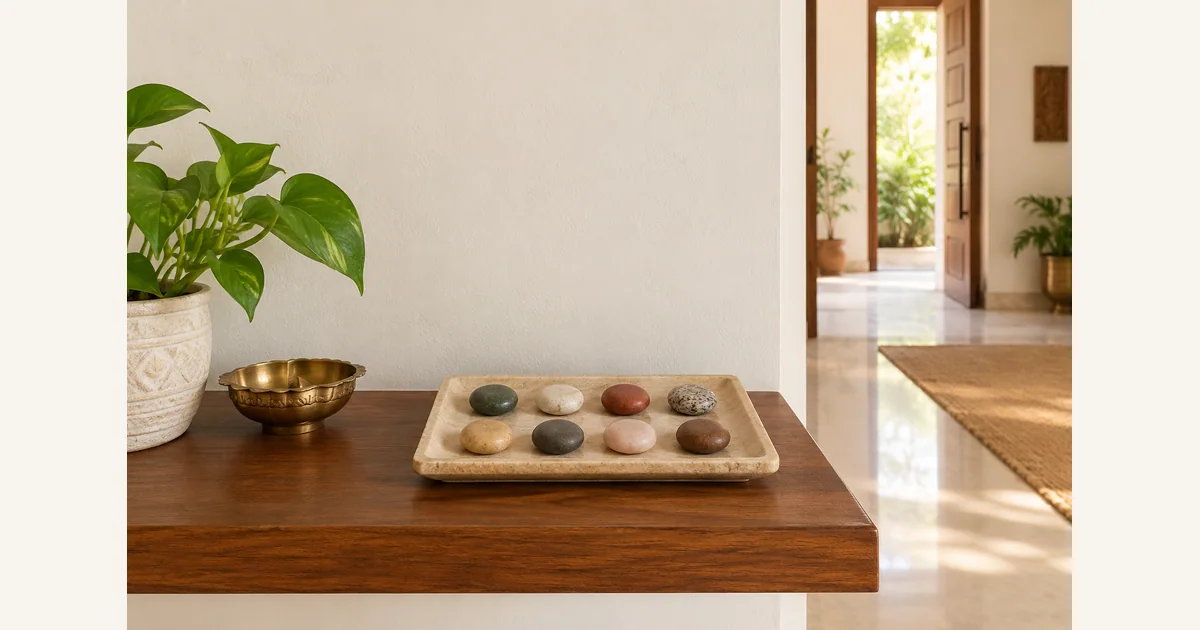
1. What is a tumbled stone, and why is it used in Vastu?
A tumbled gemstone is a small mineral piece polished until its sharp edges become rounded. In common production, rough pieces are rotated with abrasives and polishing media in stages. The resulting stone is pleasant to handle and compact enough for a puja shelf, office counter, study table or labelled professional sample tray. Tumbled describes the finishing method; it does not identify a particular gemstone. A tumbled amethyst remains amethyst, while a tumbled carnelian remains a variety of chalcedony.
Vastu Shastra begins with the relationship between site, building, rooms, direction, natural elements and how people inhabit space. In present-day Vastu practice, gemstone arrangements are also used as supportive objects for Shanti (peace), Samriddhi (prosperity), Sthirata (stability), focus, devotion or protection. Stones lend colour and symbolic emphasis to a chosen part of the home or workplace. Practitioners may combine a chosen gemstone with a Yantra, mantra, diya, sacred image, a puja routine or a daily Sankalpa (stated intention). The object then has a defined place within the household's worship or Vastu routine rather than being an unexplained addition to a shelf.
Distinguish two traditions without separating them: orientation, the Vastu Purusha Mandala and the Pancha Mahabhuta belong to the older architectural language of Vastu. Placing a particular modern, tumble-polished crystal in a specific zone is typically an adaptation used in contemporary Vastu and crystal-healing practice. Both can be discussed meaningfully; they need not be presented as an identical prescription from one ancient text.
2. The Pancha Mahabhuta: understanding the five elements
The five great elements are Prithvi (earth), Jala/Apas (water), Agni (fire), Vayu (air) and Akasha (space). Their traditional directional associations are a useful starting point when planning a Vastu-oriented gemstone arrangement. The idea is to study the quality of the zone before choosing an object: stability and weight in the south-west, water and contemplation toward the north-east, transformative activity toward the south-east, circulation toward the north-west, and an open Brahmasthan at the centre.
| Mahabhuta | Common Vastu zone | Traditional quality | Modern gemstone interpretation |
|---|---|---|---|
| Prithvi — Earth | South-west (Nairitya) | Grounding, continuity, security | Jasper, smoky quartz or earthy-toned stones for a steady, settled atmosphere |
| Jala — Water | North and north-east (Ishana) | Clarity, receptivity, renewal | Sphatik or cool blue-green stones for contemplation and an uncluttered water-associated zone |
| Agni — Fire | South-east (Agneya) | Action, transformation, discipline | Carnelian or red jasper for a warm, purposeful colour association |
| Vayu — Air | North-west (Vayavya) | Movement, exchange, communication | Light-coloured or blue-toned stones chosen for an airy, open area |
| Akasha — Space | Centre (Brahmasthan) | Openness, balance, connection | Rather than filling the centre with many stones, keep it visually clear; a small symbolic object can be placed elsewhere nearby |
A five-elements tumbled-stone kit is particularly helpful for teaching these correspondences. For a home, choose the actual zone and the family's practice first. The entire centre of the floor plan should not be packed with crystal bowls simply because Akasha represents space. Compare the Five Elements Gemstone Set with the related five-elements gemstone guide for a closer look at how stones can represent the five qualities.
3. Tumbled stone meanings: which crystal is used for which intention?
The most useful shopping question is not "Which crystal is most powerful?" but "What does this stone represent in the tradition I follow, and where will I use it?" Below are associations often discussed in current Indian Vastu, chakra and crystal practice. The meanings are not interchangeable, and their actual mineral identity still matters.
Clear Quartz / Sphatik — clarity, worship and meditation
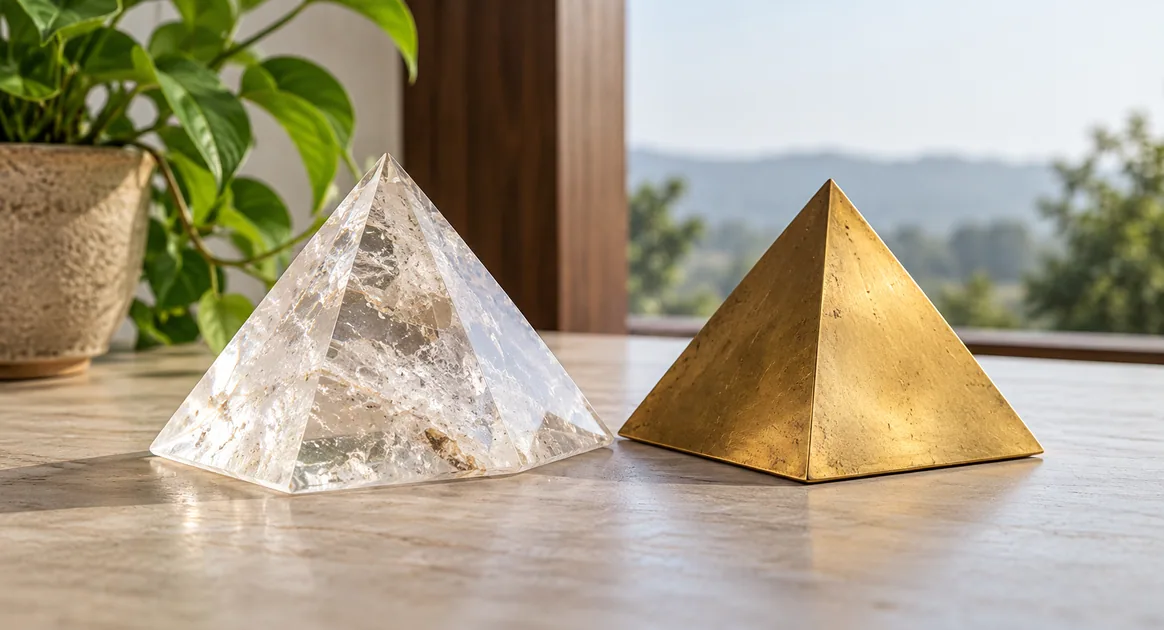
Sphatik is rock crystal, the clear variety of quartz. In Hindu devotional practice, Sphatik is valued for its purity and its association with calm worship, japa and a focused altar. A small tumbled Sphatik piece may be kept beside a puja arrangement or meditation seat, frequently in the north-east if that is the family's chosen prayer zone. Its transparent appearance is well suited to a light, clean corner. It is also useful as a reference sample when comparing transparent minerals.
Amethyst — reflection, meditation and a quiet routine
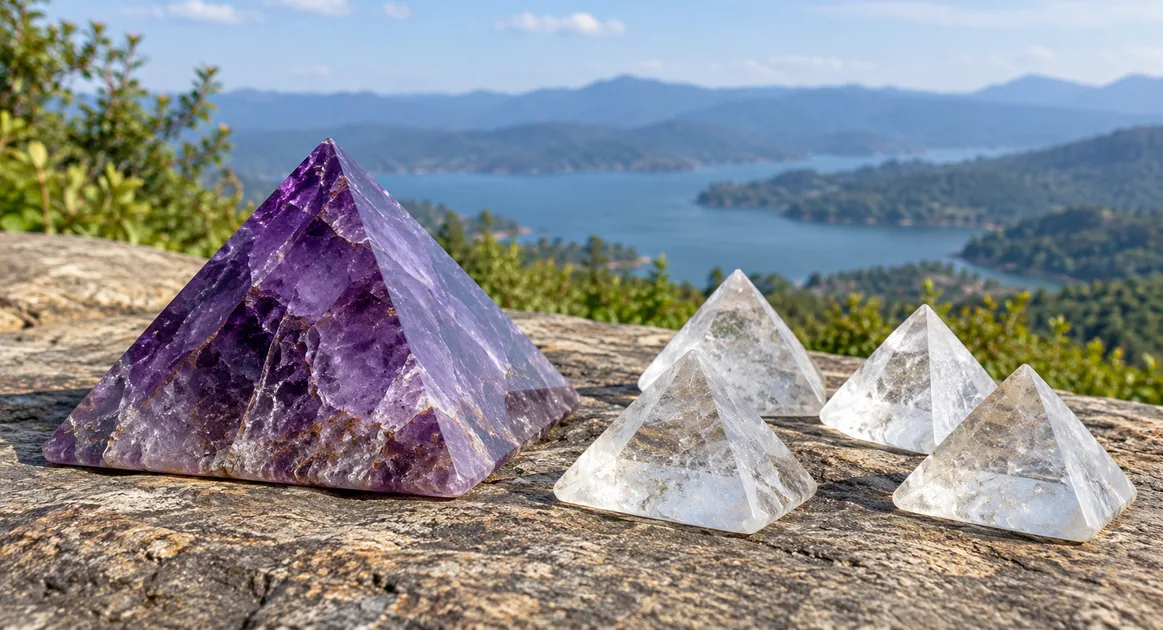
Amethyst is purple quartz. In contemporary chakra usage it is associated with Ajna (brow-centre contemplation) and sometimes Sahasrara (crown). People select it for a quiet room, reading seat or meditation shelf. A deep-violet amethyst beside Sphatik provides a coherent pairing for an Ajna-centred meditation or mantra routine, rather than mixing stones without a clear purpose.
Green Aventurine — growth, opportunity and business intentions
Green aventurine, a quartz material with characteristic sparkling inclusions, is widely chosen in modern crystal traditions for opportunity and abundance. Green is associated with Budha (Mercury) in Jyotish colour symbolism. Aventurine is a modern prosperity-oriented crystal choice; the classical Budha gemstone in Navaratna lists is emerald (Panna), which is a different mineral. For an office or retail business, it may be placed near a desk, accounts area or an intentionally chosen north-facing prosperity zone. See Green Aventurine Tumbled Stone.
Citrine and Pyrite — prosperity, enterprise and financial focus
Golden-yellow citrine is often selected as a prosperity crystal in contemporary practice. Metallic pyrite is similarly associated with commerce, financial discipline and wealth-focused arrangements. They are frequently placed in a business office, near an accounts desk or in a defined abundance corner. Citrine and pyrite are distinct materials; do not assume a golden colour alone establishes their identity. In a shop, the best arrangement is one that can remain in a fixed, clean position without interfering with daily sales activity.
Rose Quartz — affection, harmony and relationships
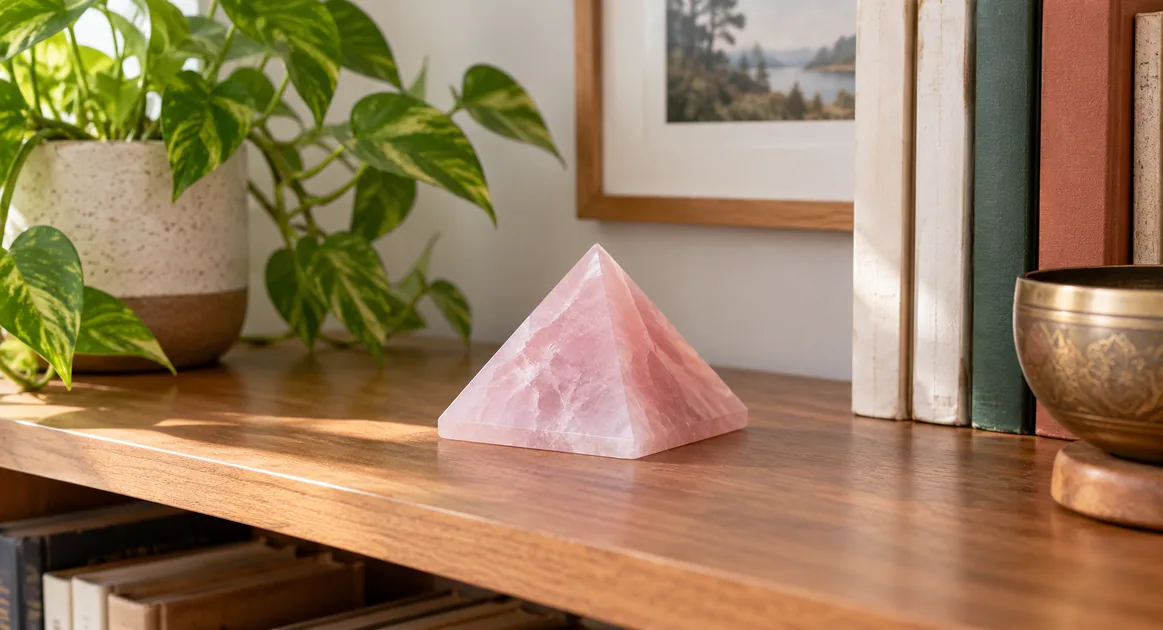
Rose quartz is pink quartz. Its modern crystal associations centre on affection, gentleness, emotional connection and household harmony. Some contemporary Vastu approaches choose it for a bedroom, a family seating area or a south-west relationship corner. A pair of pieces may be used in a shared space as a reminder of the household's intention. The traditional symbolism is the reason for the selection, not the number of stones alone. View Rose Quartz Tumbled Stone.
Carnelian and Red Jasper — courage, action and the fire principle
Carnelian is an orange-red chalcedony variety, while red jasper is an opaque, iron-coloured silica-rich material. Their warm colours make them common choices for Agni symbolism, motivation and decisive activity. A carnelian stone in a south-east-associated work zone or a red jasper in an active study/work setting is a typical contemporary example. In Vastu the south-east is traditionally linked to Agni; the choice of one particular tumble-polished material is the more recent application.
Black Tourmaline, Obsidian and Hematite — boundaries and steadiness
These dark stones are often associated with personal protection, grounding and a sense of boundary in modern crystal practice. They are different minerals: black tourmaline is a member of the tourmaline group, obsidian is natural volcanic glass, and hematite is an iron oxide mineral. A single black stone at an established entrance shelf, rather than loose pieces scattered at a threshold, is a practical way to incorporate protection symbolism. Select the material by name, not simply by a generic "black stone" label.
Tiger's Eye and Lapis Lazuli — confidence and thoughtful communication
Golden-brown tiger's eye is often chosen for alertness, confidence and purposeful decisions; blue lapis lazuli is associated with insight, learning and expression in contemporary spiritual traditions. Some practitioners use a small tiger's-eye stone on a manager's desk or lapis in a study or discussion space. These are intention-led choices, not compulsory prescriptions for every room of a given compass direction.
4. Eight Vastu directions: a practical tumbled-stone selection chart
The Ashta Dik, or eight directions, offer a readable planning framework. The direction and its traditional presiding association come first; the stone suggestions are examples of today's gemstone-based application. The table is a guide for arranging and discussing stones, not an instruction to place all eight in every home.
| Direction | Traditional association | Common intention | Example modern tumbled-stone choice |
|---|---|---|---|
| North (Uttara) | Kubera; opportunity and resources | Trade, accounting, career | Green aventurine, citrine or pyrite on a defined work shelf |
| North-east (Ishanya) | Ishana; spiritual focus, water-associated zone | Puja, study, contemplation | Sphatik or amethyst near the devotional area |
| East (Purva) | Indra/Surya in different interpretive systems; light and beginnings | Learning, clarity, fresh activity | Clear quartz or a light golden-toned stone in a bright work area |
| South-east (Agneya) | Agni; fire and transformation | Activity, discipline, enterprise | Carnelian or red jasper with warm colour symbolism |
| South (Dakshina) | Yama; responsibility and restraint | Determination, boundaries | Red jasper or tiger's eye where that purpose is personally relevant |
| South-west (Nairitya) | Nairriti/earth quality; support and stability | Continuity, family anchoring | Smoky quartz, brown jasper or rose quartz for a chosen household theme |
| West (Pashchima) | Varuna; order and reflection | Review, steady completion | Blue-toned gemstone or Sphatik on a suitable shelf |
| North-west (Vayavya) | Vayu; movement and communication | Guest activity, movement, exchange | Light agate or a cool-coloured stone in an uncluttered zone |
For readers wanting a physical teaching layout, the Eight Directions Gemstone Display Set is a useful way to compare an eight-part arrangement. The companion article Eight Directions Gemstone Arrangements Explained can support a more detailed Ashta Dik study.
5. How to place tumbled stones at home: a step-by-step Vastu method
- Decide the purpose. Choose one clear intention: a calmer puja space, a dedicated study atmosphere, a focused desk, a family harmony arrangement or a prosperity-oriented work corner. A defined purpose makes the selection intelligible.
- Mark true north on the plan. Draw a simple floor plan with north indicated. Divide it into eight broad zones and identify the centre. Use the orientation of the building or room consistently rather than guessing north from where the door appears in a photograph.
- Understand the actual activity. Locate the prayer place, kitchen, bed, seating, bookshelves, working desk, accounts area and entrances. Interpret the selected direction alongside the way the space is used.
- Match element and intention. A devotional north-east corner may suggest Sphatik or amethyst; a south-east activity zone may suggest carnelian; a business-oriented north area may suggest green aventurine or citrine.
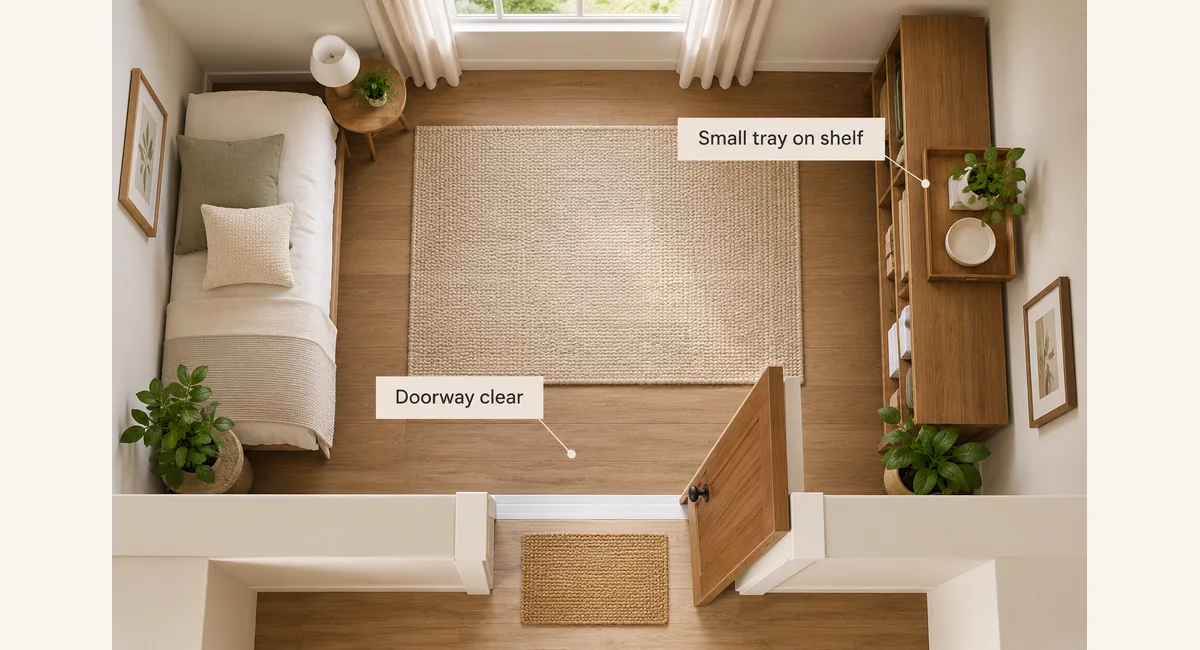
- Choose a stable arrangement. A clean bowl or shallow tray is usually enough. Keep the piece visible, identified and easy to return to its position when cleaning.
- Incorporate your own practice. If the household follows mantra, puja or Sankalpa, add the stone to that routine respectfully. A small, well-chosen arrangement is often more meaningful for daily puja than a complicated collection that nobody maintains.
- Review the result in context. Look for whether the arrangement helps the room express the purpose you selected: a calm reading area, a focused work desk or an orderly devotional space.
Worked example A: a fictional Bengaluru apartment
Imagine a two-bedroom flat with a puja shelf in the north-east of the living room, a student desk along the east wall and a couple's bedroom toward the south-west. The family wants a clear devotional focus, a consistent study routine and a gentle expression of harmony in the bedroom.
Selection: one Sphatik and one amethyst on the puja shelf, a small clear-quartz piece beside the study books, and two rose-quartz pebbles on a stable bedroom shelf. Each placement corresponds to an identified purpose. The five-element story is explained once to the family rather than treating every piece as an automatic correction for a floor-plan defect. Existing puja objects and the character of each room remain central.
Worked example B: a Bengaluru jewellery showroom
Consider a jewellery retailer whose entrance faces east, accounts desk sits toward the north, manager's table is near the west side and secure stock storage is in the south-west. The owner wants a welcoming customer area, steady accounts work and a place for daily prayers.
Selection: a green aventurine-and-citrine arrangement on the accounts shelf for prosperity-oriented symbolism; a tiger's-eye pebble on the manager's desk for decision-making intention; and Sphatik by the existing altar. If a protection-themed stone is chosen for the entrance, it belongs on a safe display ledge, not on the floor where customers walk. The owner can place a small handwritten Sankalpa near the existing altar and maintain a simple placement register: the actual stone name, zone, intended purpose and date of arrangement. This gives the staff a consistent practice rather than a shifting set of display objects.
6. Tumbled gemstone sets for Vastu professionals: what belongs in a reference kit?
A professional Vastu consultant often needs more than a decorative mixed bag. A reference kit should help explain mineral identity, the element or zone used in the interpretation, and why two practitioners might choose different stones for the same intention. The most useful kit combines labelled specimens with a reproducible placement method.
| Kit type | Core purpose | Suggested components | When to use |
|---|---|---|---|
| Single-stone starter | Learn one stone and its association | One named Sphatik, amethyst or green aventurine; identity card | Home puja shelf, meditation or a desk |
| Five Elements Set | Demonstrate Prithvi, Jala, Agni, Vayu, Akasha | Five identified samples, an element table and the intended pairing scheme | Consultations, classes, foundational Vastu discussions |
| Eight Directions Set | Demonstrate Ashta Dik on a floor plan | Eight numbered stones, eight-direction diagram and a north marker | Room-by-room explanations and example layouts |
| Nine-Planet Arrangement | Explore Navagraha colour and symbolic correspondences | Nine labelled pieces with graha correspondence notes | Jyotish-inspired educational layouts; distinguish from classical Navaratna prescription |
| Client working kit | Present options and record an agreed layout | Labelled stones, floor-plan sheet, orientation, placement record and storage case | Professional site discussions and follow-up |
The Nine-Planet Gemstone Arrangement Set introduces Navagraha symbolism. It should not be confused with a classical Navaratna jewellery recommendation: a tumbled colour-study set and the individual gem-quality planetary stones used in some Jyotish prescriptions serve different purposes. For a directional sample layout, compare the Eight Directions Set; for elemental symbolism, compare the Five Elements Set.
Example: a consultant's eight-direction tray
A consultant draws an eight-part floor plan, places a north arrow at the top and numbers eight separate compartments clockwise from north. Each sample is accompanied by its actual name: 1 green aventurine, 2 Sphatik, 3 clear quartz, 4 carnelian, 5 red jasper, 6 smoky quartz, 7 blue agate and 8 pale agate. A second card explains the proposed intention and directional relationship of each. The consultant can now demonstrate an arrangement clearly without leaving the client unsure what any stone represents.
Important distinction: those eight minerals are a worked example of one modern teaching arrangement, not a fixed ancient eight-mineral list. For professional work, the explanation must connect the client's floor plan, the selected direction, the applicable Vastu principle and the chosen stone. A labelled tray alone is not the consultation.
7. Choosing between a single stone, a mixed set and an entrance arrangement
Use an individual stone when one practice or personal intention is clear. For example, one rose-quartz pebble might be enough to mark a relationship-focused spot, while one Sphatik may be sufficient beside a small altar. A curated three- or five-stone combination is more suitable when the intention spans a desk or a room. Larger directional or professional sets are best when you want an instructional chart or multiple labelled samples.
For an entrance, a compact arrangement can combine a dark protection-associated stone with a clear stone representing welcome and clarity, if that suits the household's practice. The Home Entrance Gemstone Arrangement Set is an example of a grouped offer. For open shelves or work areas, separate the intention from the physical specification: know whether the order contains two, five, eight or nine pieces, and exactly which minerals are supplied.
For a broader material selection, see the Tumbled Stones category and the Vastu collection. If the same stones are intended for an ordinary decorative arrangement rather than Vastu practice, the comparison in Tumbled Stones for Home and Office Display covers that alternate use.
8. How to buy good tumbled stones: mineral identity, size and finish
Traditional intention matters, and so does knowing what you are actually buying. Stone names, treatments, size, quantity and finish should be clear. Ask for a list of the actual materials in any mixed set; a photograph of a multicoloured tray does not identify the contents.
- Material: distinguish true amethyst from dyed agate, natural citrine from differently treated quartz sold under that name, and black obsidian from black tourmaline or hematite. Different minerals may share a colour, even when their devotional or astrological associations differ.
- Finish: a properly polished pebble should be comfortable to hold; naturally occurring pits or colour zones do not always indicate poor workmanship.
- Size: use a small stone for a desk or puja shelf, and a labelled collection for teaching. Compare actual dimensions instead of assuming all product photographs show the same scale.
- Treatments: request disclosure of dyeing, heating or other relevant treatment when applicable. Some stones in the market may have been enhanced to alter their colour.
- Care: wipe gently with a soft dry or slightly damp cloth where appropriate to the actual mineral. Avoid harsh chemicals, strong heat and prolonged soaking of a mixed assortment. Keep softer or fragile minerals separate from harder quartz pieces.
For a professional reference kit, include labels, an inventory sheet, the chosen tradition's correspondence table and a simple drawing of the layout. This adds real educational value without making the physical collection unnecessarily complicated.
9. How to begin a gemstone arrangement with Sankalpa, puja and care
A Vastu gemstone placement can become part of the household's regular practice rather than a one-time purchase. A simple process is enough; elaborate rituals are optional and depend on family custom.
- Clean and prepare the chosen place. Clear the designated shelf or altar and ensure there is room for any regular puja items already used by the family.
- Identify the stone. Note its material and intended role: for instance Sphatik for devotional clarity in Ishanya, a green stone for a north-oriented business intention, or rose quartz for family harmony.
- Set the Sankalpa. State the purpose in a few words: for concentration in daily study, for peaceful household relations or for mindful management of the business. This gives the arrangement a clear spiritual theme.
- Place the stone respectfully. Use a clean cloth, bowl, wooden base or small tray suitable for the family's tradition. If a Yantra or deity image is already established, keep the arrangement harmonious with it.
- Include mantra or prayer if customary. Some households recite their Ishta Devata mantra, a simple Shanti prayer or a relevant Graha mantra. The correct practice follows the devotee's sampradaya, family tradition or personal spiritual guidance.
- Maintain the arrangement. Return stones to their recorded positions after cleaning. Avoid prolonged water exposure for mixed mineral sets and use appropriate care for each actual material.
Worked example C: a Vastu consultant visiting a small office
A fictional consulting office has three staff desks on the east side, an accounts cabinet in the north, a meeting table in the west and a prayer alcove near the north-east. The proprietor asks for an arrangement focused on communication, disciplined accounts work and a settled devotional practice.
The practitioner first marks north on the plan, notes the existing room functions and discusses which tradition of directional placement the proprietor follows. They choose green aventurine for the accounts-area prosperity theme, a small Sphatik for the prayer alcove, and lapis lazuli as a personal symbol of considered communication on the meeting-room shelf. These are separate choices for separate purposes; the consultant need not prescribe eight different stones merely because the plan contains eight directions.
The visit ends with a brief written record: orientation, selected materials, placement positions, traditional significance and a simple maintenance routine. This is how a professional gemstone kit becomes a working educational and placement tool.
10. Common mistakes when selecting Vastu gemstone sets
- Starting with a random mixed bag: first define whether the arrangement is for Ashta Dik, Pancha Mahabhuta, Navagraha, chakra practice or one personal intention.
- Confusing the name of a stone with its colour: green aventurine and emerald are different materials, and a blue tumbled mineral should not be described as Neelam merely because it is blue.
- Mixing independent systems: an eight-direction Vastu chart, a seven-chakra layout and a nine-graha set use different interpretive maps. Decide which map the current practice actually uses.
- Ignoring the room layout: the north-east puja shelf, south-east kitchen and north business area have different functions. Understand the space before placing the objects.
- Leaving no product information: label a professional kit with names, numbers, intended use and quantity, especially when several similar-looking stones are included.
11. Questions people ask about tumbled stones in Vastu
Which tumbled stone is best for Vastu at home?
There is no single choice for every room and intention. Sphatik is a common devotional selection, rose quartz is chosen for relationship-oriented symbolism, and carnelian is often used for warm Agni-associated intent. Begin with the purpose and the relevant space; then choose the stone.
Where should I place a green aventurine stone for business?
In modern prosperity-oriented Vastu practice, green aventurine is often associated with opportunity, commerce and the north-oriented work zone. A manager's desk, accounts shelf or appropriately designated business corner is a practical location. Record the chosen position if you are arranging a professional set.
Can I use several different gemstones together?
Yes, when the combination has a coherent purpose. A five-element kit uses differences intentionally; a nine-planet kit uses named planetary correspondences. For personal worship, two complementary stones may be easier to relate to than a large mixed bowl with no explanation.
Are Vastu tumbled stones and Navaratna gems the same?
No. Tumbled stones are a finish and can include many common minerals. A classical Navaratna arrangement refers to a specific tradition of nine planetary gems, generally discussed in the context of Jyotish and jewellery. A colourful nine-piece Vastu study set may illustrate the Navagraha, but it does not automatically replace a chart-based Navaratna recommendation.
Do I need stones in every direction?
Not necessarily. An eight-direction tray is excellent for learning and professional demonstration. In a real home or shop, a practitioner may choose only one or two placements relevant to the consultation. The overall arrangement should support the actual use and devotional character of the rooms.
Can I use stones with a Vastu pyramid, Yantra or gemstone tree?
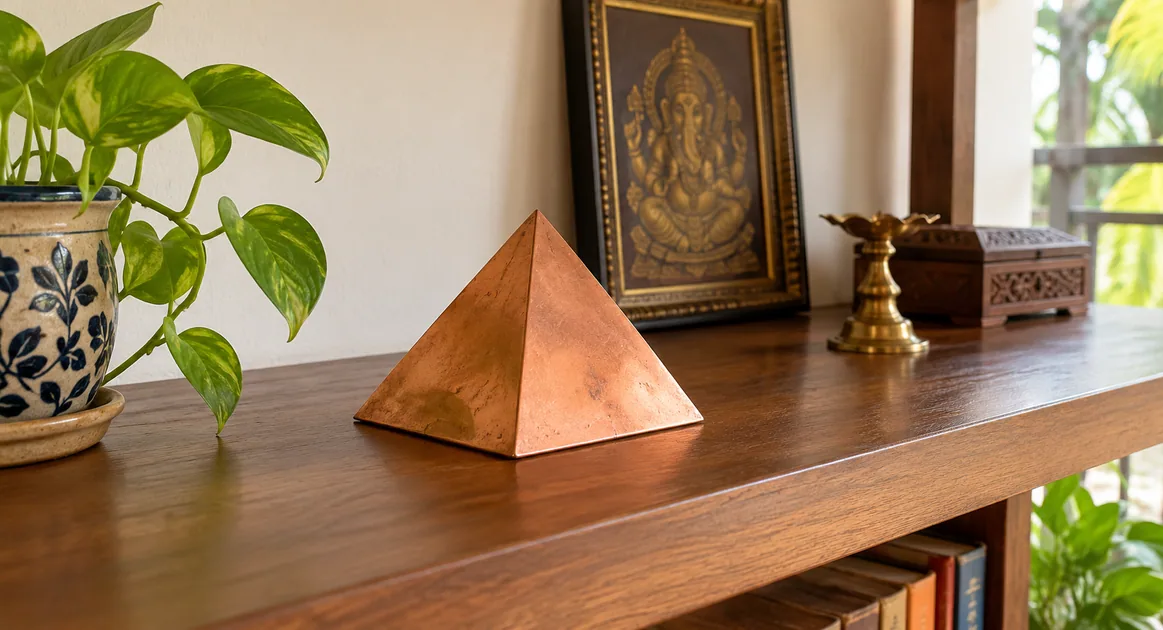
Yes. A stone, pyramid, Yantra or gemstone tree may be part of one purposeful altar or directional arrangement. Rather than collecting multiple objects with repeated meanings, choose a clear centre of attention and explain what each addition represents. Explore the wider Vastu collection to compare formats.
12. Further reading: build a connected Vastu study
Continue with the more detailed guides Eight Directions Gemstone Arrangements Explained, Five Elements and Gemstones, and Tumbled Stones for Home and Office Display. You can also explore the Gemstone collection for individual materials and the Tumbled Stones collection for available arrangements.