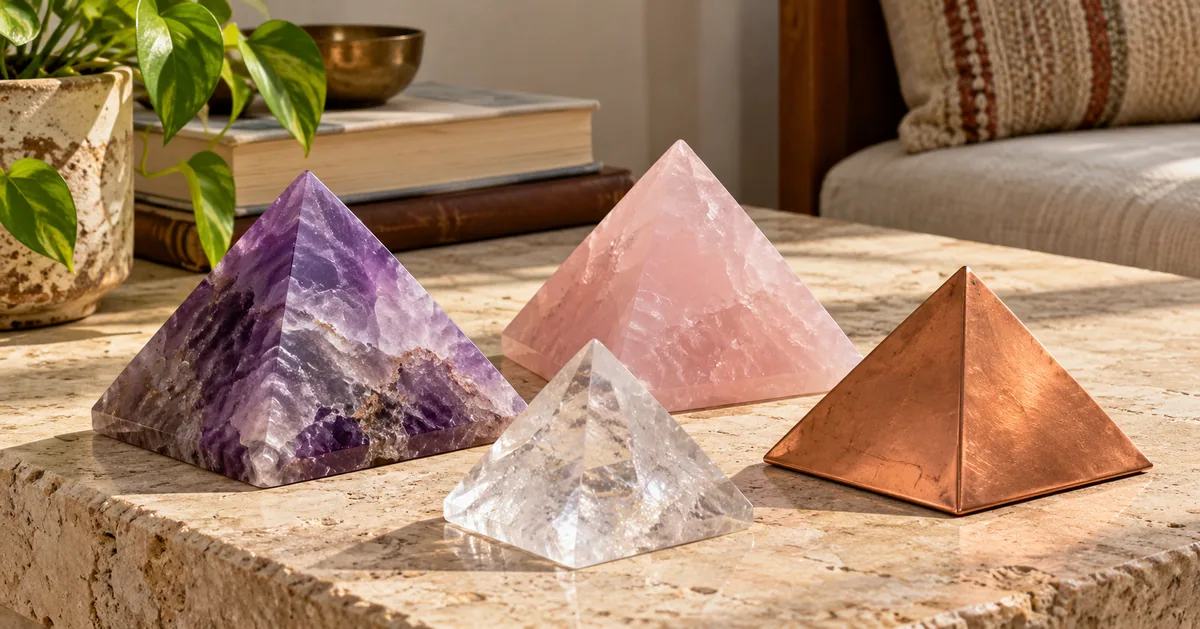
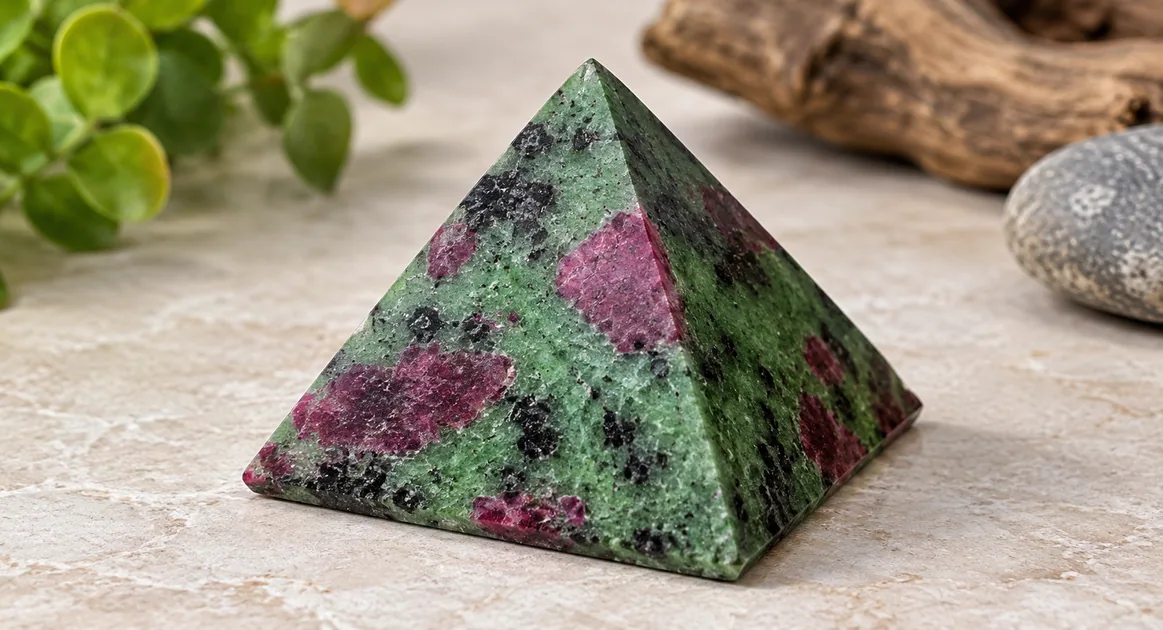
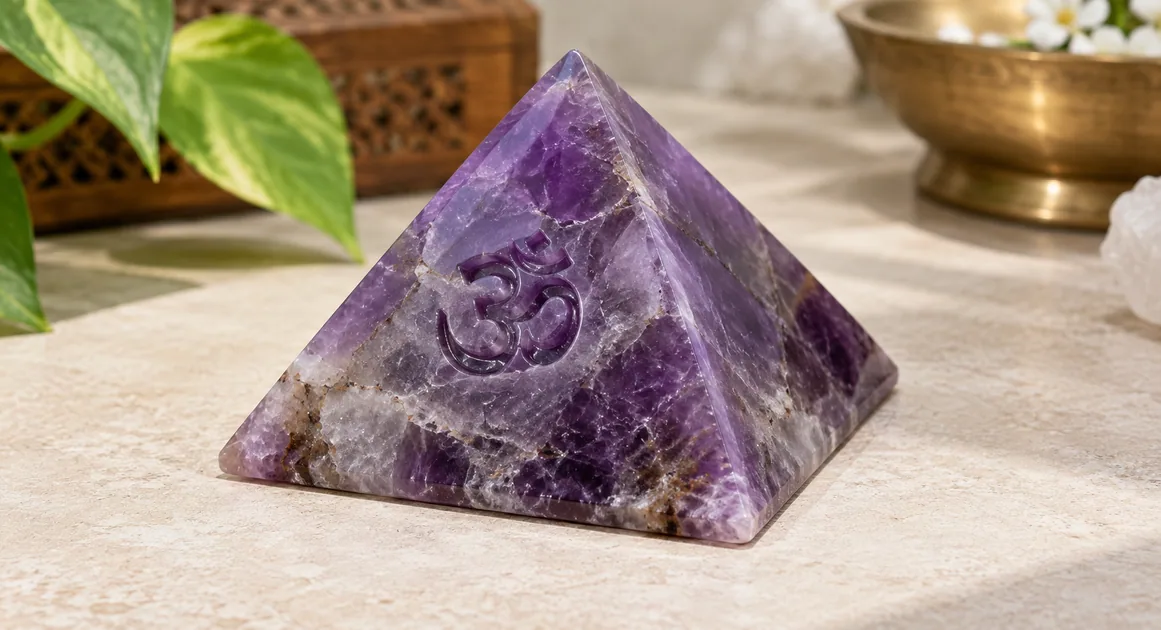
What are tumbled stones? Tumbled stones are small pieces of natural rock, mineral, or occasionally natural glass whose rough edges have been smoothed and whose surfaces have been polished. Most are rounded through repeated contact with abrasive grit inside a rotating or vibrating machine. They may also be partly sawn, shaped, or finished by hand. A tumbled stone is therefore a form of gemstone preparation, not the name of a particular mineral: clear quartz, carnelian, agate, amethyst, jasper, tiger eye, and many other materials can all be sold in polished-pebble form.
A tumbled crystal is useful for three different reasons. It exposes the material's colour and pattern, creates a smooth object for handling and jewellery design, and offers an affordable way to build a labelled gemstone collection. In homes, prayer spaces, and Vastu displays, individual stones may also be selected for their established or contemporary spiritual associations. Understanding how the stone was made helps you judge workmanship before choosing where and why to use it.
This guide follows the complete journey from rough mineral to polished gemstone, explains rotary versus vibratory tumbling, distinguishes natural colour from treatments, and gives practical examples for OmmRudraksha buyers, jewellery showrooms, students, and Vastu practitioners.
1. How does rough stone become a polished tumbled gemstone?
Natural rough is rarely ready for a jewellery tray. A piece may have jagged points, thin protrusions, pockets of softer material, fractures, attached host rock, or an irregular surface. Tumbling gradually wears down high spots while finer abrasives remove smaller scratches. The result is not simply 'a stone washed in a machine': each stage controls a different scale of surface damage.
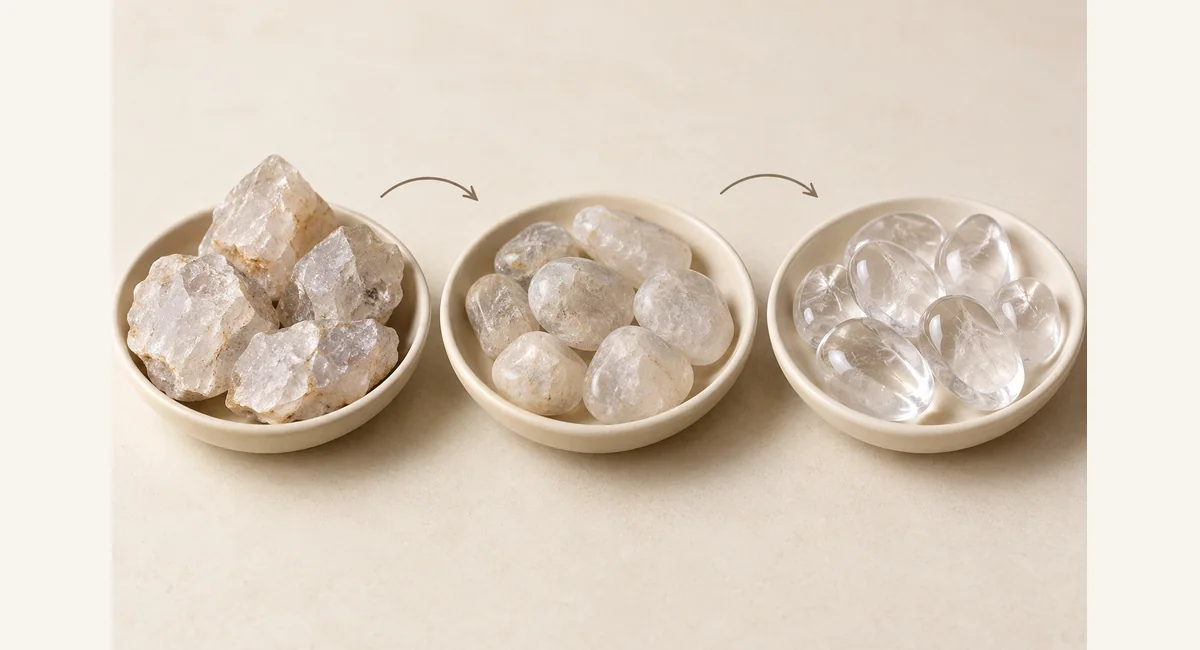
Think of three pieces of quartz from one parcel. The first is angular rough with sharp corners; the second is rounded but still matte after shaping; the third has a smooth reflective finish after fine grinding and polish. All three can be genuine quartz. Their visual differences come chiefly from workmanship, rather than a difference in mineral identity.
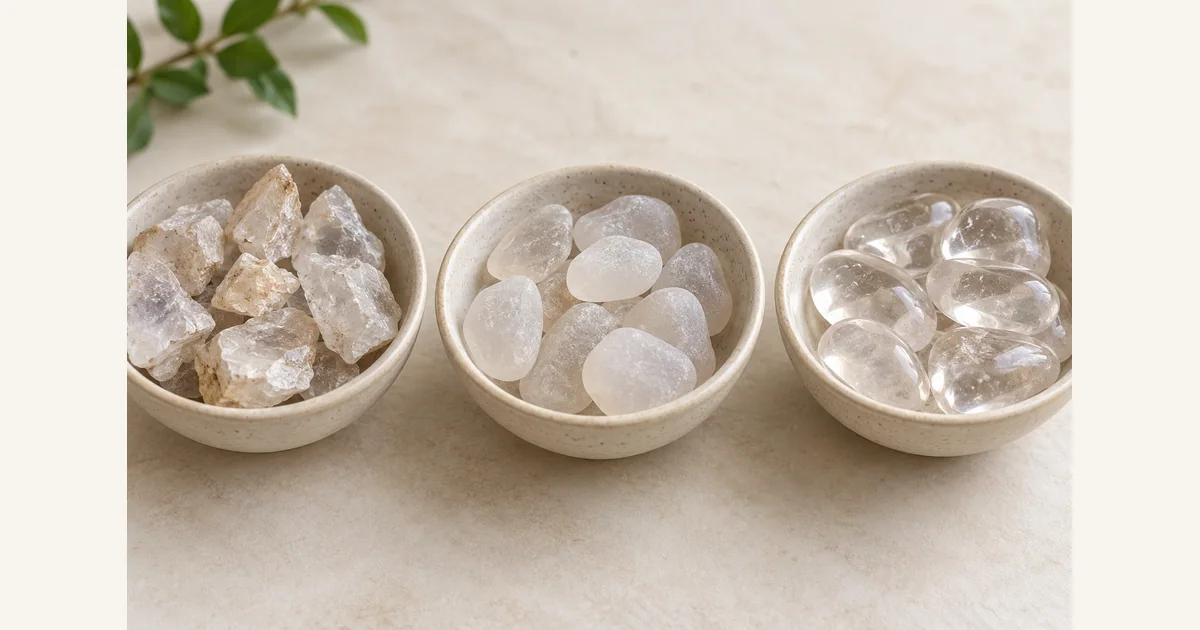
Why are some stones oval, flat, or uneven?
Tumbled stones do not need to be perfect spheres. A long starting fragment often becomes an oval pebble; a thin slab can remain flat with softened edges; a piece with a resistant central mass may develop an asymmetrical outline. Some stock was cut into preforms before tumbling to create a more consistent size. The key is whether the finish matches the seller's description and the intended purpose: a flat-bottom specimen suits a display tray, whereas a rounded, comfortable piece is easier to hold.
2. The four usual stages of rotary rock tumbling
A rotary rock tumbler turns a sealed barrel containing suitable rough, water, and abrasive. The moving mixture produces controlled abrasion. The sequence below is a widely used lapidary starting point; exact grit sizes, proportions, processing times, and the amount of material removed depend on the equipment maker, mineral and initial rough. A batch may need extra shaping cycles before it is ready to advance.
| Stage | Typical abrasive | What happens | Expected appearance |
|---|---|---|---|
| 1. Coarse shaping | Often 60/90 or 80 silicon-carbide grit | Rounds sharp edges, removes protrusions and opens the main outline | Rounded but strongly scratched or dull; commonly a week or repeated weeks |
| 2. Medium smoothing | Often 120/220 or 150/220 silicon carbide | Removes coarse scratches and evens the surface | More uniform, generally matte; commonly about a week |
| 3. Fine or pre-polish | Often 500–600 grit or a maker-specified fine abrasive | Removes the fine scratches left by the medium stage | Smooth, finely satin-like finish, sometimes with a slight sheen |
| 4. Final polish | Material-compatible aluminum-oxide or cerium-oxide polish, as specified | Develops reflectivity by reducing remaining microscopic roughness | Gloss that remains visible when the specimen is dry |
Rotary batches commonly take roughly four to six weeks when the rough shapes easily, and longer if coarse shaping must be repeated. This is not a fixed production promise. Hard agate with pits, highly irregular quartz, a mixed-hardness parcel, or a delicate mineral can all behave differently. Production quantities also change because abrasive shaping removes material; the weight of the rough is not the weight of finished polished stock.
Stage 1: Choosing and sorting suitable rough
Before grinding, a lapidary examines each piece for fractures, cavities, veins, and composition. Stones with broadly compatible hardness and polishing behaviour are usually grouped together. Mixing very soft stones with harder quartz can lead to uneven wear, scratches, or bruised edges. Large blocks and fine chips may also collide differently, so batch size and protective media matter.
A small surface vein may look attractive after polishing. An open cavity can instead trap abrasive, polish compound, and water. A deep fracture can extend during handling. Not every specimen belongs in a high-motion tumbler: some are better sawn and hand-polished, stabilized by a specialist, or left as mineral specimens.
Stage 2: Removing rough scratches
After coarse shaping, the operator removes the slurry and thoroughly cleans the barrel, lid, stones, and any reusable media before beginning the medium-grit stage. Carrying one coarse abrasive grain into a finer stage can create scratches that spoil the polish. A good medium stage produces a consistently even surface; heavily scratched stones should not be hurried forward just because the scheduled week has passed.
Stage 3: The pre-polish inspection
Pre-polish is the bridge between 'smooth to the touch' and 'visibly reflective.' Examine the dry stone in angled light. A glossy wet appearance can conceal fine scratches; a clean, dry specimen shows whether the surface is actually ready. Some natural pits or structural features may remain, but the broader surface should be free of major grinding marks.
Stage 4: Polishing and the last rinse
Polish is an abrasive finishing step, not a transparent varnish applied to every stone. It enhances the reflectivity of a suitably prepared surface. A good quartz pebble, for example, can shine after polishing because the finishing process progressively reduces scratches. Final cleaning removes residue so the stone can be photographed, examined, sorted, and packed. Some lapidaries also use a short burnishing cycle for cleaning or improved surface appearance.
Workshop note: Keep used abrasive slurry out of household drains because it can settle and obstruct plumbing; collect and dispose of it in accordance with local waste rules. Use the equipment manufacturer's operating instructions, and avoid dry grinding or dust exposure. Potentially hazardous, friable, or unstable mineral materials require specialist handling rather than casual home-tumbling experiments.
3. Rotary vs vibratory tumbling vs hand finishing
The word 'tumbled' often describes a rounded finish, but not every polished stone is made the same way. The chosen method affects shape, cost, rate of removal, and how closely the finished piece resembles the rough.
| Method | Movement or process | Usual result | Best suited to | Important limitation |
|---|---|---|---|---|
| Rotary tumbler | Barrel rotates; stones roll through abrasive slurry | More rounded corners and a pebble-like outline | Quartz, agate, jasper and other compatible robust rough | Shape removal may be slow; soft materials can be damaged |
| Vibratory tumbler | Bowl or tub vibrates; pieces circulate against media | Polished surface with more of the original silhouette retained | Suitable pre-shaped or more delicate pieces where controlled finishing matters | Limited coarse rounding; requires careful adjustment |
| Cutting and hand-polishing | Specialist shapes and polishes selected faces | Controlled outlines, selected faces or stable display surfaces | Distinctive specimens, palm stones, decorative pieces | Workmanship and finish vary; it is not necessarily true free tumbling |
| Combination workflow | Preform by cutting, then smooth and polish mechanically | More consistent sizes with rounded finished edges | Matched sets and repeatable retail assortments | The starting shape may not be a naturally rounded pebble |
Thus a flat-backed palm stone and a loose polished pebble can both be made of amethyst without being the same commercial product. When buying for a precise directional tray, dimensions and the individual profile matter more than whether the label uses the popular word 'crystal.'
4. Which minerals are commonly made into tumbled stones?
Many popular gemstones are quartz varieties or quartz-rich rocks because they accept attractive polish and can be reasonably durable for handling. Other minerals require different procedures. Even a familiar stone name can cover a range of rough quality, so the table is an orientation rather than a promise that every specimen will tumble safely.
| Stone sold in tumbled form | Material identity | Typical visual character | Care or selection point |
|---|---|---|---|
| Clear quartz / Sphatik | Quartz | Transparent to milky, occasional veils and inclusions | Judge surface scratches separately from internal veils |
| Rose quartz | Pink variety of quartz | Soft pink, often translucent or milky | Check for even polish; strong prolonged sunlight may affect colour |
| Amethyst | Purple variety of quartz | Violet, lilac and colour zoning | Protect colour from strong heat and prolonged harsh light |
| Agate / carnelian | Chalcedony (microcrystalline quartz) | Bands, cloudy patterns or orange-red translucence | Ask whether colour has been dyed or heat-enhanced |
| Jasper | Microcrystalline silica-rich rock | Opaque earthy colours and complex patterns | Inspect for cracks, pits and misleading trade names |
| Tiger eye | Fibrous-looking quartz material | Silky moving band of light (chatoyancy) | Rotate under light; check for dye or other modifications |
| Obsidian | Natural volcanic glass | Dark, sometimes reflective or patterned | Can chip to sharp edges; pack separately |
| Fluorite, calcite, malachite | Distinct softer or more sensitive minerals | Colourful, banded or patterned | Require special care; avoid treating them like durable quartz |
Pyrite is another popular polished collectible, but its metallic luster, tendency to oxidize under unsuitable storage conditions, and sensitivity to moisture make it different from ordinary quartz pebbles. A generic instruction to 'soak and polish all crystals' is inappropriate for mixed material assortments. Mineral identity should drive care decisions.
5. How do you distinguish polish, coating, dye and natural colour?
Polishing changes a stone's surface texture and shape. Dyeing changes or intensifies apparent colour; heat treatment may alter colour or inclusions; filling and coatings may change appearance or durability. A product can be genuine natural mineral and still be enhanced. Conversely, a brightly polished imitation can look convincing in photographs. The word 'shiny' alone resolves none of these questions.
For example, a natural banded agate may be artificially dyed blue. A clear polished piece may be rock crystal, glass, or another mineral. A purple quartz pebble may be natural amethyst, while a yellow-orange quartz product may be natural citrine or heat-treated amethyst. Identification and treatment disclosure are separate facts and should be recorded separately for a professional collection.
| Buyer observation | What it can indicate | What it cannot establish | Better follow-up |
|---|---|---|---|
| High gloss | Well-finished broad surface | Natural origin or absence of treatment | Ask for material and treatment information |
| Colour concentrated in fractures | A feature worth examining for possible dye | Definitive proof of dye by sight alone | Request disclosure and specialist evaluation if important |
| Internal veils or bands | Natural-looking internal structure or texture | A complete laboratory identification | Compare with known material; use a qualified gemologist for high-stakes purchases |
| Uniform, vividly coloured beads or stones | Consistent commercial sorting | That all are the same unmodified mineral | Ask for names, lot information and treatment records |
| Dry surface remains glossy | Surface polish is present, not merely water sheen | Freedom from cracks or chips | Check edges and grazing-light scratches individually |
For retail purposes, a practical label can read: 'Amethyst — polished natural quartz; violet colour; approximately 22 × 17 mm; treatment information: not supplied by source.' Where treatment status is uncertain, say that it is unconfirmed rather than guessing. Lab analysis is appropriate when a high-value identification matters; destructive scratch or chemical tests are not a sensible way to assess a finished shop product.
6. How to check the quality of a tumbled stone before buying
A good stone does not need to be perfectly round, entirely transparent, or free from every natural inclusion. Quality depends on whether the specimen was correctly described, whether its finish and dimensions suit the purpose, and whether visible damage was disclosed. The same naturally banded piece can be desirable to a collector and unsuitable for an exact colour-matched tray.
A six-part inspection under ordinary light
- Confirm the name: compare the invoice, label and actual parcel; separate mineral species from trade and marketing names.
- Inspect the dry surface: tilt it beneath a diffuse lamp to find scratches, deep pits and uneven polished patches.
- Feel the edges gently: a handling stone should not have loose grains, a sharp chip or an exposed fractured point.
- Check inclusions versus cracks: an internal pattern can be natural; a fracture reaching the surface may need closer attention.
- Record size and weight: check millimetres and grams rather than relying on 'small,' 'large,' or 'premium' labels alone.
- Verify the quantity: a listing for ten stones is different from a 100 g assorted bag, and size variation changes how many items fit in a kit.
| Quality term in a listing | What to inspect | A useful question for the seller |
|---|---|---|
| High polish / glossy finish | Dry sheen across broad surfaces | Are pits or unpolished patches allowed in the lot? |
| Premium / A grade / AAA | Colour, finish, dimensions, defects and lot consistency | What objective criteria define this seller's grade? |
| Natural / genuine | Correct mineral identity and natural origin | Are colour treatments, fillings or coatings disclosed? |
| Mixed gemstone collection | Count of named materials and accuracy of labels | Are all stone types guaranteed or randomly assorted? |
| Size 20–30 mm | Actual length, width and thickness range | Is that measurement a maximum dimension or an average? |
| One kilogram bulk lot | Net gemstone weight and usable piece count | Are chips, filler media and packaging excluded from the weight? |
Do not confuse the Mohs hardness scale with a universal 'quality grade.' It measures resistance to scratching, not resistance to every type of impact, chemical change or cleavage. Glassy obsidian can be brittle; a hard quartz pebble can still fracture; a softer stone can still be valuable if it is identified and cared for properly. The look of a naturally included stone may be part of its appeal.
7. Why are tumbled stones popular in Indian spiritual and Vastu settings?
In Indian traditions, Ratna refers to precious stones and gems, while Sphatik commonly names rock crystal or clear quartz. Sphatik has established associations with worship and prayer objects, including crystal malas and ritual pieces. Navaratna jewellery has a distinct, long-standing relationship with the nine planetary principles of Jyotisha. A small modern tumbled-stone set, however, is not automatically a classical Navaratna arrangement or an ancient Vastu instrument.
Today's polished crystal trays draw on several sources at once: traditional gemstone symbolism, individual devotional practice, visual colour choices, chakra-oriented contemporary collections and modern Vastu consultation displays. These can be meaningful categories when the material and purpose are clearly described. A clear quartz pebble used in a prayer corner is a different choice from a precisely specified astrological gemstone worn on a body; the name of a stone alone does not make those applications interchangeable.
Connecting polished gemstones to Pancha Mahabhuta
The Pancha Mahabhuta framework—Prithvi (earth), Jala (water), Agni (fire), Vayu (air) and Akasha (space)—is central to many Indian philosophical and Vastu explanations. In a contemporary teaching tray, a practitioner may choose a stone colour and texture to illustrate a particular element. Such a display is a representation of a concept, not a replacement for evaluating the building's actual layout, light, ventilation, entry, usage and condition.
| Contemporary display theme | Example polished materials | Typical setting | How to use responsibly |
|---|---|---|---|
| Sphatik and prayer | Clear quartz | Clean puja shelf or personal worship area | Identify material correctly and keep it separate from fragile idols or lamps |
| Grounding or earth motif | Jasper, agate, green aventurine | Home desk, entry display or Vastu demonstration tray | Use stable placement and accurate labels |
| Warmth and activity motif | Carnelian, tiger eye | Study shelf or professional display | Choose for intended symbolism and appearance; keep from edges |
| Calm meditation motif | Amethyst, rose quartz | Meditation shelf or private quiet space | Protect from strong sun and avoid treating colour as proof of identity |
| Directional study tray | Eight separately labelled gemstone types | Vastu consultation or educational workshop | Mark the actual directions from a measured plan, not the tray's orientation alone |
For Jyotisha, the method of selecting a personal planetary gemstone depends on the interpretation of the horoscope, gemstone type and individual circumstances. A loose modern tumbled-stone assortment should not be presented as equivalent to a specified ring, traditional Navaratna setting or individual astrological recommendation.
8. Worked example: from raw quartz to a labelled Vastu teaching set
Suppose a Bengaluru shop wants a small, reproducible demonstration that explains how polished stones are made and what 'genuine' means. Begin with four pieces of the same known quartz material and keep the records together:
- Piece A — rough quartz: retains natural angular surfaces; label it as 'rough, not tumbled.'
- Piece B — shaped quartz: demonstrates rounded edges but an unfinished or matte surface.
- Piece C — finished quartz: displays a smooth dry polish for comparison.
- Piece D — polished quartz with visible natural inclusions: helps visitors understand that an internal veil does not automatically mean poor workmanship.
Photograph all four against the same neutral background and identify them as one mineral in different conditions. Explain that the manufacturing stage changes texture, but does not by itself establish natural origin or treatment status. Then place two or three further clearly labelled stones—such as carnelian, rose quartz and tiger eye—in a separate Vastu demonstration tray. Their spiritual roles can be discussed without confusing them with the quartz manufacturing sequence.
Example inventory card for a professional set
| Field | Example entry | Why record it? |
|---|---|---|
| Material | Clear quartz / Sphatik | Keeps mineral identity separate from selling name |
| Form | Tumbled polished pebble | Distinguishes from rough, palm stone or point |
| Measurement | 24 × 19 × 15 mm; 11 g (illustrative) | Supports replacement and repeatability |
| Appearance | Transparent–milky with an internal veil | Captures natural variation for the customer |
| Treatment information | Not specified by supplier | Prevents an unsupported 'untreated' claim |
| Purpose and care | Sphatik reference sample; dry padded compartment | Links traditional use with everyday handling |
For a simple Vastu demonstration, choose a clean tray with individual compartments and small labels rather than a loose mixed mound. If arranging around the eight directions, determine the real orientation of the room and state whether the placement is symbolic, a training example or part of a wider consultation. This makes the set easier to explain and avoids duplicating the purpose of a gemstone tree, pyramid, or prescribed astrological ring.
9. Common polishing defects and what they mean
Buying by photograph alone can obscure quality problems. The following observations are useful whether examining your own work or receiving a bulk parcel.
| Visible condition | Possible explanation | Buyer or workshop action |
|---|---|---|
| Dull, frosted finish | Not fully polished; possibly intentionally matte | Compare with listing, distinguish unfinished from planned finish |
| Random fresh scratches | Abrasive contamination or contact with harder pieces | Inspect under angled dry light; segregate affected lot |
| Small chips at edges | Collision, cleavage, impact or poor packing | Choose intact stones for handling sets; photograph defects |
| Open pits | Original cavities or harder/softer mineral zones | Decide whether naturally characteristic or unacceptable for intended grade |
| Wax-like temporary shine | Surface product, residual polishing media or oil | Ask about finishing agents and recheck a clean dry piece |
| Colour concentrated along fissures | Possible staining, dye penetration or natural variation | Request treatment disclosure; do not make a definite diagnosis from photographs |
| Different size in the same set | Variable starting rough and material loss | Check size band, counts and agreed tolerances |
A finished surface may display an 'orange-peel' texture, subtle flats, or visible polishing lines. Good lapidary practice considers the mineral's internal structure and natural wear behaviour before deciding whether those features constitute a defect. For a educational display, it can be useful to keep one imperfect example, clearly labelled, to teach why material and workmanship must be assessed separately.
10. Choosing a first tumbled-stone collection
For a first purchase, start with a small collection whose names are known rather than a large bag chosen only for colour. A six-piece study set might contain clear quartz, amethyst, rose quartz, carnelian, banded agate and tiger eye. Each demonstrates a different appearance—transparent or milky, purple quartz, pink quartz, orange chalcedony, banded chalcedony and moving chatoyant light. Check whether any of the pieces are treated and write that information on the inventory card.
If the goal is a Vastu gemstone set, arrange only after defining the room or teaching question. A family may prefer a single Sphatik pebble beside an established puja arrangement. A showroom can keep labelled samples in separate trays to answer buyers' questions about genuine material and finish. A consultant may need a compact kit with measured sizes, reliable names and replaceable specimens, not a different elaborate arrangement for every customer.
Three purchase situations
- Personal collector: buy one clear quartz and one patterned agate. Ask for size, treatment status and a photo of the actual specimens. Look for different mineral textures and compare dry polish.
- Jewellery showroom: buy a sample tray of different mineral types with each stone separately labelled; maintain a supplier record and avoid assuming that visually similar blue specimens are the same mineral.
- Professional Vastu practitioner: prepare a repeatable set, record quantities and weights, and keep a distinct section for traditional Ratna/Jyotish references. Replace a missing specimen by its named identity and specification, not merely a matching colour.
Where the appearance or purchase price makes accurate identity important, consult a qualified gemologist. For ordinary educational stones, clear descriptions and a reliable supplier are often more useful than elaborate certificates for every small pebble.
11. Frequently asked questions
Are tumbled stones real gemstones?
They can be. 'Tumbled' describes a finished shape, while 'gemstone' refers to a material used for ornament or collection. Natural mineral, natural glass, dyed mineral and manufactured glass can all be smoothed and polished. Ask what material the seller is actually offering.
Does polishing change a crystal's mineral composition?
Ordinary mechanical tumbling removes surface material; it does not normally change quartz into another mineral. Heat, coatings, staining, stabilization and other treatments are separate processes and should be described independently.
How long does it take to make polished stones?
Many rotary quartz or agate batches take several weeks through shaping, smoothing, pre-polish and final polish. Deep pits, unsuitable rough, changes of grit, equipment and finishing expectations can extend the process.
Why does a wet stone look shinier than the same stone when dry?
Water can temporarily reduce the visibility of microscopic surface irregularities. A good lasting polish must be inspected on the clean, dry stone. Wet photography is not an adequate substitute for a genuine dry-finish inspection.
Are more expensive tumbled stones necessarily better?
No single price rule applies. Cost reflects rarity, material identity, colour, treatment, size, yield from rough, labour, finishing consistency and supplier margin. A correct, modestly priced specimen can be better for a teaching kit than a rare but difficult-to-identify stone.
Can every mineral be polished in the same tumbler?
No. Hardness, brittleness, cleavage, chemical stability, toxicity considerations and density differ. Stones with different behaviours may require separate batches, specialized techniques or avoidance of casual tumbling altogether.
Is a tumbled stone suitable for a puja shelf?
A clearly identified, clean and suitably placed Sphatik or other chosen stone can be part of a personal devotional display. Respect the established requirements of the particular worship tradition and protect the object from flames, oil spillages, falling and rough handling.
Can a polished stone replace a traditional Jyotisha gemstone?
Not automatically. A personal planetary gemstone recommendation concerns the relevant stone, quality, wearing method and astrological context. A mixed tumbled-stone set may be useful for learning or decoration, but should not be labelled as an equivalent prescription merely because the colours look similar.
12. Final checklist: understand the material before the meaning
Before selecting a tumbled crystal for your home, gift, jewellery project or professional Vastu kit, confirm (1) what mineral it is, (2) what finish and shape it has, (3) whether treatments are known, (4) what size and quantity are supplied, (5) whether cracks and chips matter to the intended use, and (6) how it will be stored and displayed. These six points make a polished gemstone easier to appreciate, explain and maintain.
The attraction of a tumbled stone is the meeting of natural mineral character and human lapidary skill. The rough retains its geological story; the polished surface makes it accessible as a specimen, a decorative piece and, where meaningful to the owner, a part of spiritual practice.
Continue reading
- Tumbled Stones vs Raw Crystals, Points and Palm Stones
- Tumbled Stone Sizes, Weights and Quality Grades
- Natural, Dyed, Heat-Treated and Reconstructed Stones
Explore the existing Vastu and gemstone collections for wider context.